

Rechat Testimonials Feature Explained: Reputation Marketing vs. AI Discovery
Rechat this week launched a built-in tool that automatically routes client reviews into its Marketing Center, eliminating the gap between receiving a five-star review and actually putting it in front of prospects. The Rechat Testimonials feature is a genuine fix for a documented workflow problem. The company is also arguing it positions agents to get surfaced by AI recommendation systems and the outside evidence on that claim supports the direction while cutting against the specific mechanism Rechat implies.
The core finding: Testimonials is a capable Rechat client reviews tool for the closing half of the reputation equation. The visibility half where AI discoverability actually lives requires something different.
Reputation already drives agent selection at scale. According to Inman's coverage of the NAR 2025 Profile of Home Buyers and Sellers, 35% of sellers named a Realtor's reputation as their top factor in choosing who to hire. Rechat CEO Shayan Hamidi pushed further: "AI assistants are already deciding which agents get recommended, and they make that call based on your online reputation," Inman reported this week. The research supports the broader premise. It does not support the implication that a CRM-based content tool is what moves the needle.
What the Rechat Testimonials feature actually does
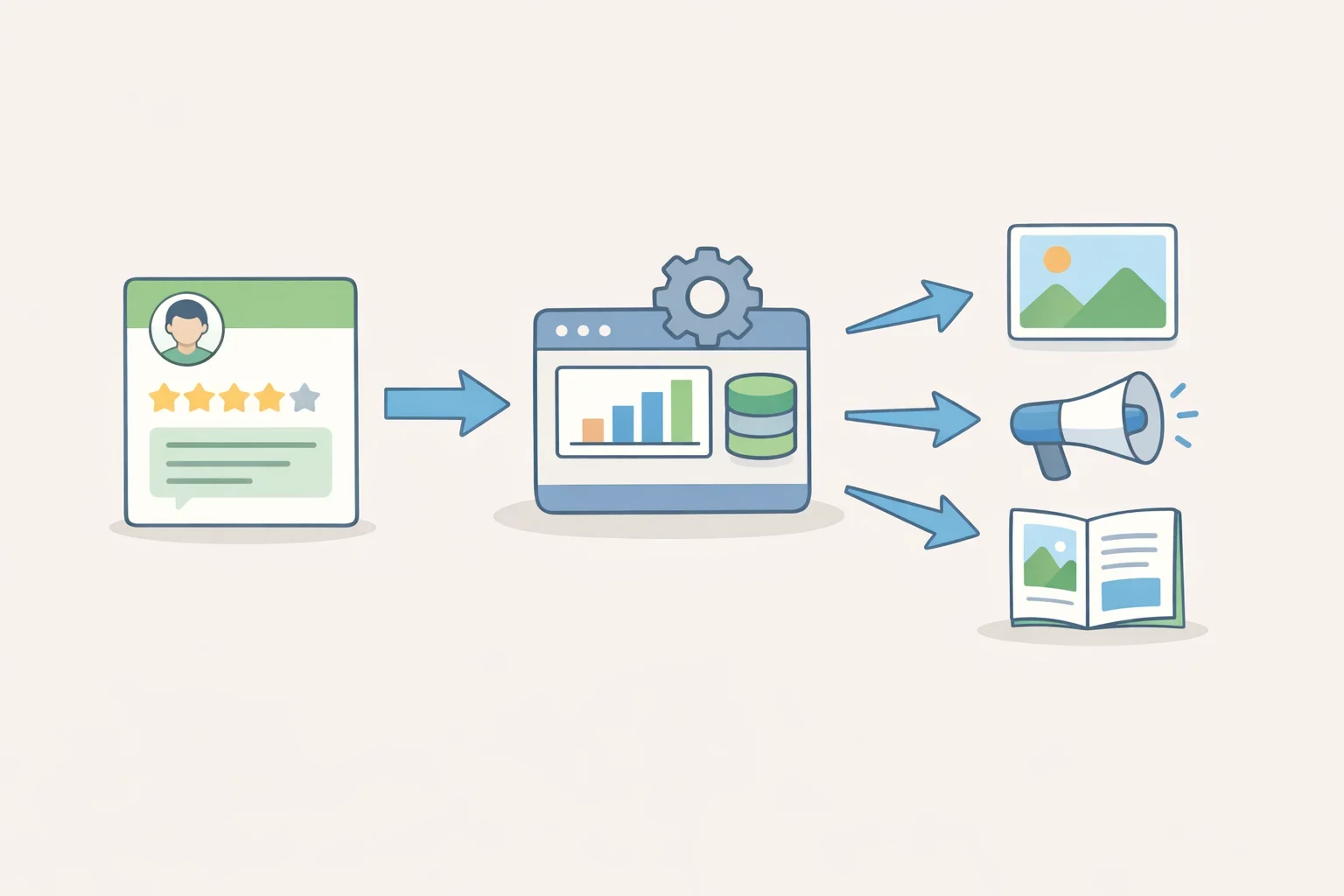
Testimonials is built directly into the Rechat platform where agents already manage contacts and deals. When a client review comes in, it flows automatically into the Rechat Marketing Center, ready to drop into listing presentations, social posts, and campaigns no reformatting, no screenshots, no separate tool required, RealEstateNews reported this week.
The friction it eliminates is specific and real. Most agents manage reviews informally: praise accumulates across Zillow, Google, and old email threads, and converting any of it into a listing presentation slide requires manual effort that most agents skip, Inman reported. Reputation demonstrably influences hiring decisions, yet it rarely shows up at the moments in the sales process where it could do the most work.
Rechat CTO Emil Sedgh put it plainly: "An agent's reputation is one of their most powerful marketing assets. Until now, it's been the hardest one to use," adding that Testimonials makes the workflow intuitive enough that a client sharing kind words can translate directly into campaign-ready content, Inman reported. The design logic holds. Fewer steps between receiving social proof and deploying it means more agents actually deploy it.
What Testimonials is not: a tool that builds publicly indexed review presence. It handles reuse inside agent-controlled contexts presentations, social posts, campaigns where the audience is already paying attention. Getting reviews onto platforms that search engines crawl and rank is a separate job entirely, one that requires different behavior. Rechat's launch conflates these two things, and that conflation matters for how agents decide where to put their effort.
What the evidence actually supports on AI discovery
Rechat's strategic bet on AI-mediated discovery is not baseless. Inman's broader coverage this week described the company as "betting on reputation as AI reshapes how agents get found" a direction the outside research supports, even if the specific mechanism complicates Rechat's pitch.
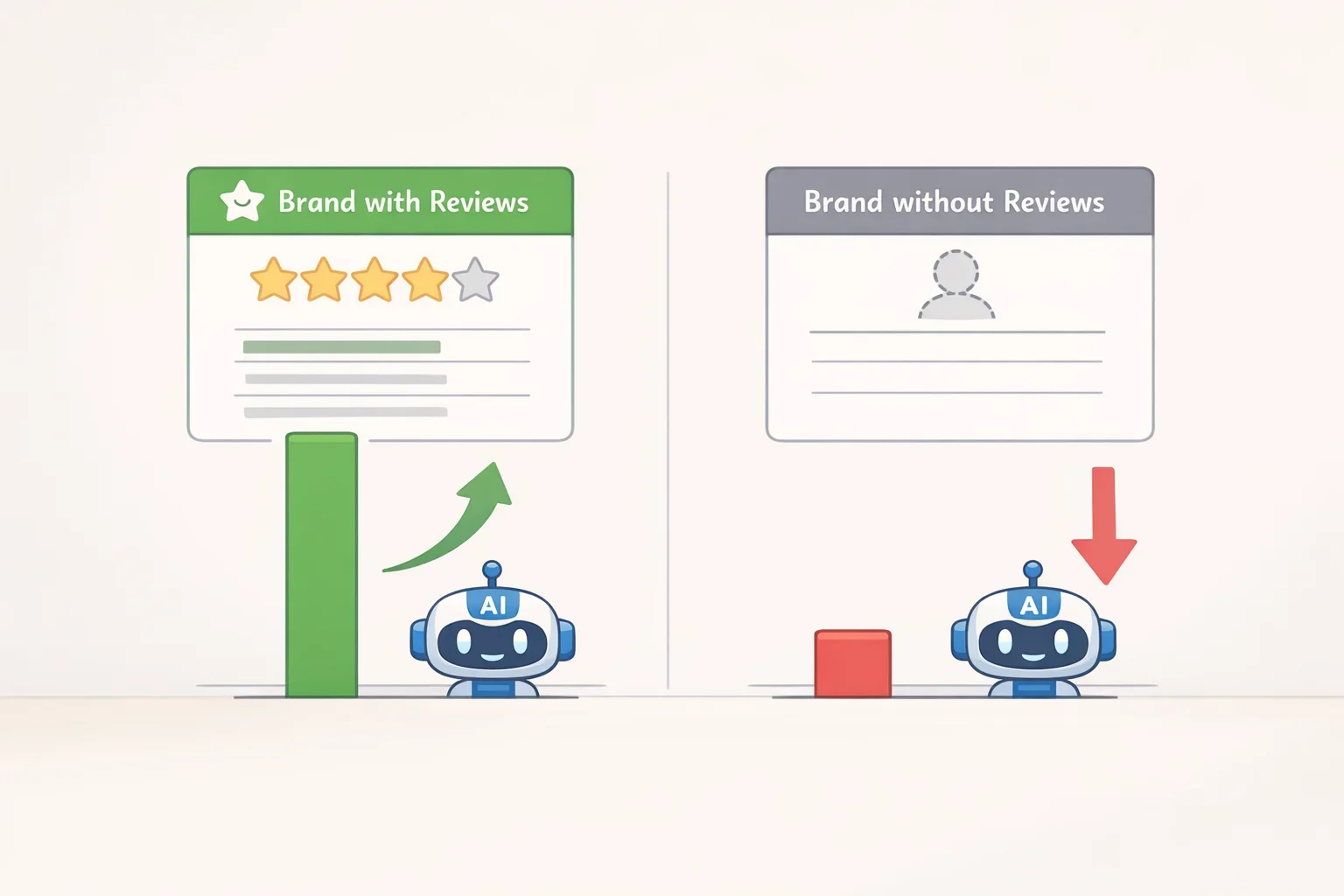
A Seer Interactive analysis of 800,000 AI responses, published in May, found that brands with no Trustpilot profile had a median AI citation rate of 1%. Brands with even a minimal profile as few as one to thirteen reviews jumped to 53.5%. Brands with active, established profiles climbed another 25 percentage points beyond that. The gap between existing in the review ecosystem and not existing in it is not subtle.
The absence finding is the sharpest data point in the argument. Seer found ChatGPT explicitly calling out missing review presence in its actual responses, using language like "[Brand] lacks reviews on trusted sites like Trustpilot, BBB.." meaning no review profile does not register as neutral; it registers as a trust deficit, according to the Seer analysis. AI is actively noting that absence at precisely the moment a consumer is closest to a decision.
Where the mechanism diverges from Rechat's framing: Seer found that 99.5% of AI citations arrived through organic search rankings. AI systems are reading what search engines have already indexed and ranked, not independently auditing a brand's reputation across private platforms, the analysis found. Seer's findings support the broader premise that review presence affects AI visibility, but they do not show that routing reviews into a CRM changes discoverability. The lever is public, indexed review presence on platforms search engines actually crawl which public profiles such as Google Business Profile, Zillow, or brokerage pages may provide, though the research stops short of proving this at the individual agent level.
That caveat matters. Seer's data covers brand-level Trustpilot profiles, not individual real estate agents on agent-specific review platforms. The directional logic that public, indexed review presence shapes AI visibility is plausible and consistent with how AI search works. The specific citation rates have not been validated at the agent level. Treat the analogy as a working hypothesis, not a proven mechanism.
Two jobs, one pitch
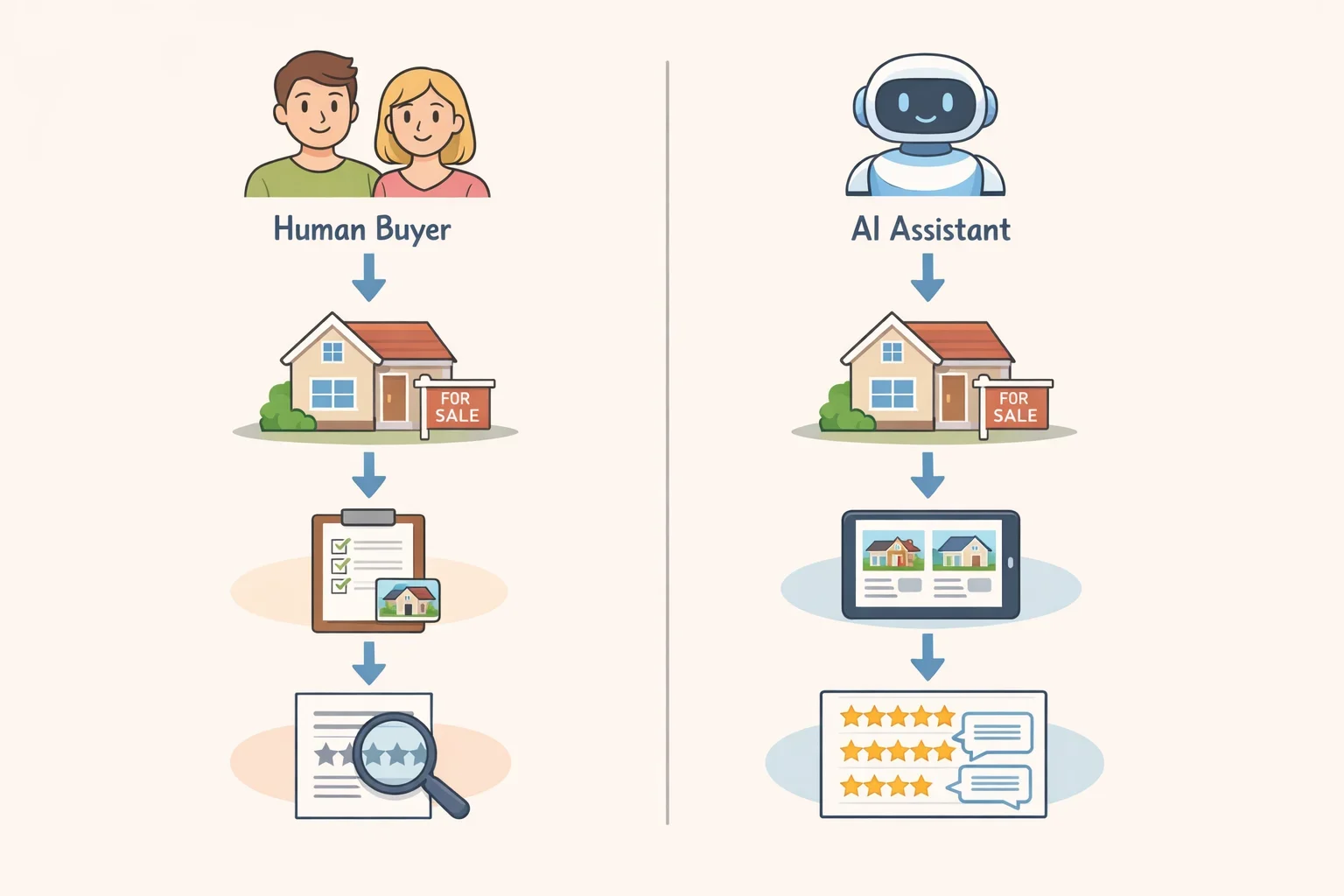
Hamidi's fuller launch statement captures the tension clearly. "Buyers and sellers have read your reviews before you ever walk in the door. In this business, reputation decides who gets the listing. And now there's a new buyer in real estate, and it's not a person. It's AI," Inman reported. The first two sentences describe a problem this Rechat reputation marketing feature directly addresses. The third describes a different problem that requires a different solution.
For the human audience the buyer scrolling an agent's profile before a showing, the seller comparing candidates before a listing appointment having reviews readily deployable in marketing materials matters. A review sitting in a Gmail thread helps no one. One that appears in a listing presentation, or surfaces in a social post at the right moment, at least reaches someone making an actual decision. Rechat Marketing Center reviews, pulled in automatically through Testimonials, close that gap inside a platform agents are already using.
For the AI audience the assistant compiling a shortlist when someone asks which agent to hire what matters is whether those reviews exist on indexed public platforms where search engines can find them. Fully optimized profiles received 9.5 times more AI co-mentions than brands with no profile, Seer found, meaning those are the agents getting named when a consumer asks about someone else entirely. That visibility comes from public indexability, not CRM organization.
The work splits accordingly. Building and maintaining active review presence on public, indexed platforms whatever those are for a given agent's market is the work that may earn AI visibility, based on current evidence. Using Rechat's Testimonials feature to convert those reviews into presentation slides, campaign assets, and social content is the work that closes deals. Both matter. They are not the same work, and conflating them means optimizing the wrong thing.
What agents should watch going forward is whether Rechat moves to address the public-indexability side: integrating with review platforms directly, helping agents solicit reviews to indexed profiles, or building tools that bridge the two audiences. As it stands, Testimonials is a capable tool for the closing half of the reputation equation. Whether the AI-discovery pitch eventually earns a matching feature is the question the launch leaves open.
