

- AI search optimization for e-commerce brands: what's measurable, what matters, and who's already being left out
- The visibility gap is already entrenched, and challenger brands are at the bottom
- The commercial case: engaged traffic, but conversion still lags
- What AI search visibility for e-commerce actually measures and what it can't
- The measurement market is forming before the standards are set
AI search optimization for e-commerce brands: what's measurable, what matters, and who's already being left out
Referral traffic to U.S. retail websites from generative AI sources grew 1,200% between July 2024 and February 2025, according to Adobe Analytics, which tracked more than one trillion U.S. retail site visits. During the November–December 2024 holiday season, that figure ran 1,300% above the prior year. The channel is growing fast, and for most e-commerce brands running AI search optimization, it's growing blind.
No platform exposes data on which brands appeared in AI-generated responses, how often, or in what context. There's no Search Console equivalent for AI answers, no API returning mention rates, per AudFlo. Most brands are running content and SEO programs without any signal about whether AI systems are including or excluding them from relevant recommendations. That measurement gap is what the emerging category variously called Generative Engine Optimization (GEO), Answer Engine Optimization (AEO), and AI search visibility is trying to close.
The visibility gap is already entrenched, and challenger brands are at the bottom
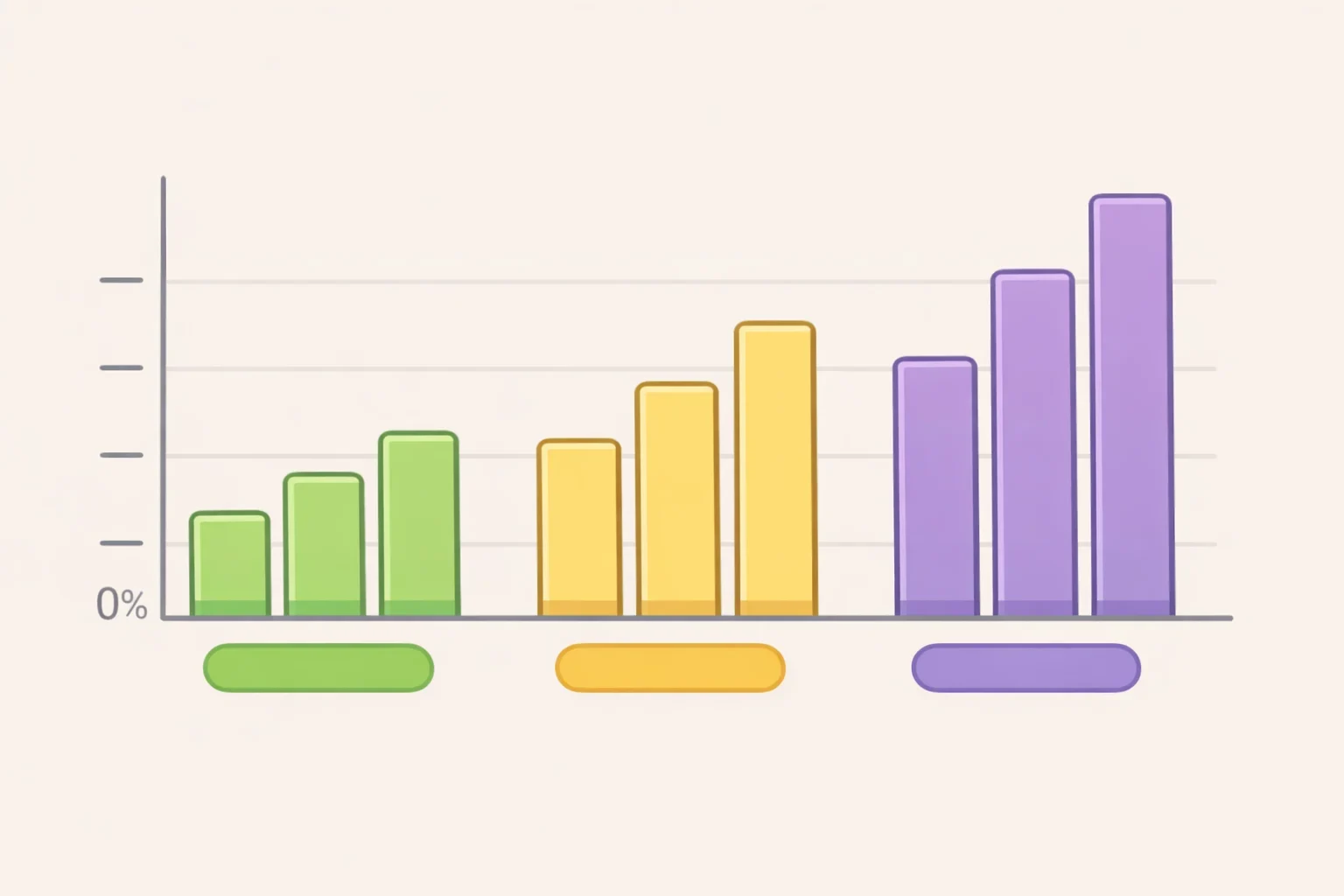
The hierarchy in AI search results is steeper than most marketers assume, and it tracks almost exactly onto existing brand size. An analysis of more than 100,000 AI prompt responses across 100-plus brands found that globally recognized names appeared in 73% of relevant AI answers. Established mid-market brands landed at 44%. Niche and small brands showed up in just 11%, according to research published on ResearchGate earlier this month. Visibility rose consistently with brand maturity, roughly 30 percentage points at each step down the ladder.
That gap matters because AI answers don't passively reflect demand. When 47% of consumers who use generative AI for shopping say they're using it for product recommendations specifically, and 53% plan to increase that use, the AI response has become a decision input, per Adobe Analytics. A brand sitting at 11% visibility in that context isn't just underrepresented. It's largely absent from conversations that precede purchase.
Citation patterns add texture. About 78% of citations in AI answers link to a brand's own corporate website. But among non-corporate sources, YouTube ranks first ahead of Reddit, editorial media, and Wikipedia. The single most-cited content format overall is the ranked "best-of" listicle, accounting for roughly 21% of all citations, per the same ResearchGate analysis. Owned content and third-party roundup placement serve different functions and pull from different source pools. Both matter; they require different strategies.
The commercial case: engaged traffic, but conversion still lags
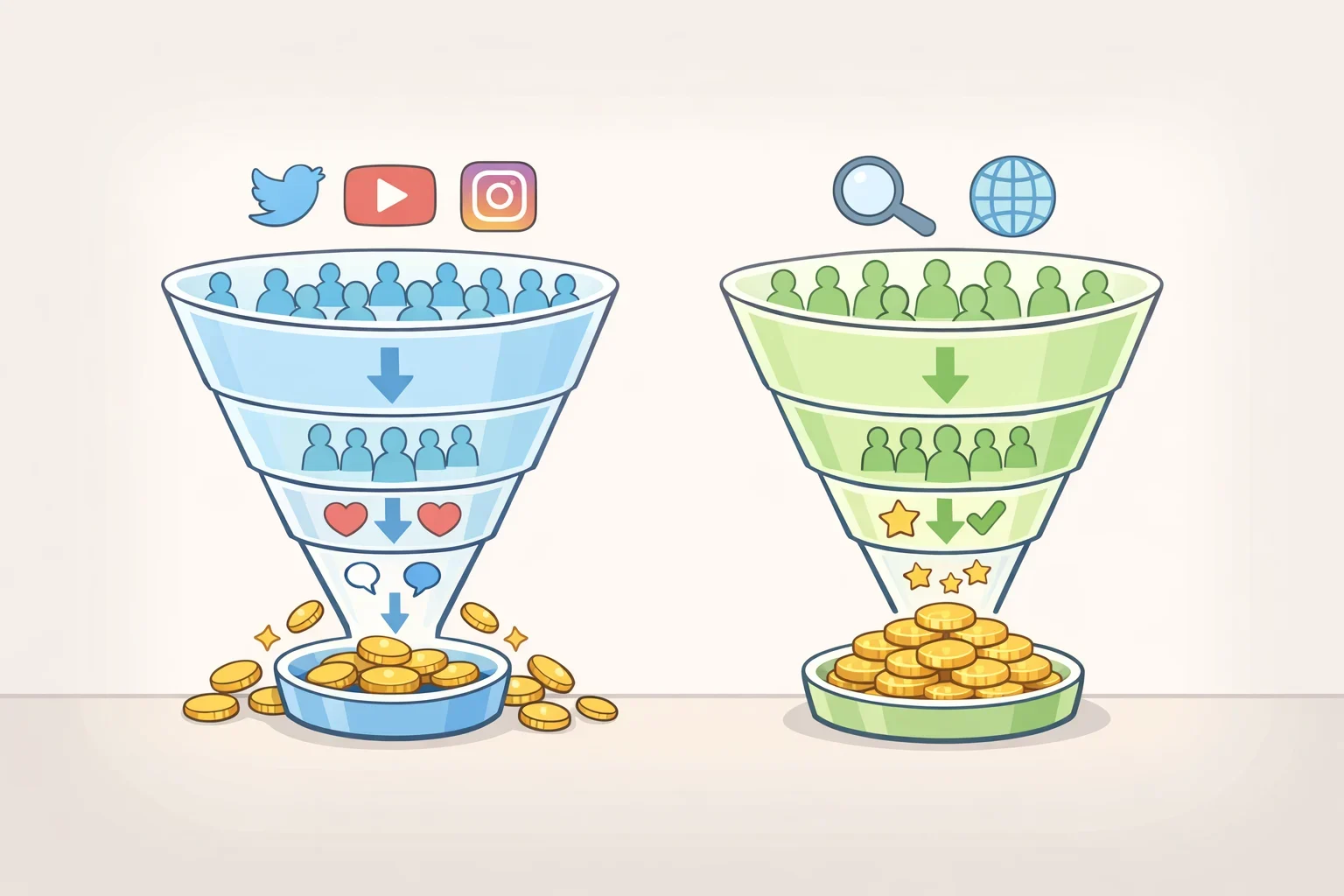
Visitors arriving from generative AI sources behave differently from other traffic. They spend 8% more time on site, browse 12% more pages per visit, and bounce 23% less often than visitors from paid search, organic, email, or social, per Adobe Analytics. One detail that sharpens the profile: 86% of AI-referred retail traffic arrives via desktop, versus just 34% of overall e-commerce traffic. These visitors are conducting longer, more deliberate research sessions before following through to a specific site.
Conversion is where the numbers get harder to spin. As of early 2025, AI-referred traffic was still 9% less likely to convert than other sources, a notable improvement from July 2024 when it ran 43% behind, but a gap that hasn't closed, per the same Adobe data. Strong engagement metrics with weaker conversion points to a channel that rewards upper-funnel investment, at least for now.
The causal evidence is thinner still. A large-scale study of AI brand visibility proposed seven protocols to test whether specific optimization tactics could reliably improve AI inclusion, framing them as proposals for future investigation rather than proven methods, per ResearchGate. Whether improving generative engine optimization for e-commerce reliably lifts revenue remains an open question the field hasn't yet assembled the evidence to settle.
What AI search visibility for e-commerce actually measures and what it can't
The fundamental challenge is structural. Traditional keyword tracking produces a stable, deterministic signal: your rank for a given query. AI models generate responses probabilistically. The same prompt run twice can surface different brands, because the model is sampling from a probability distribution rather than retrieving a stored answer, per AudFlo. There is no fixed AI rank. There's only directional signal built through repeated sampling over time.
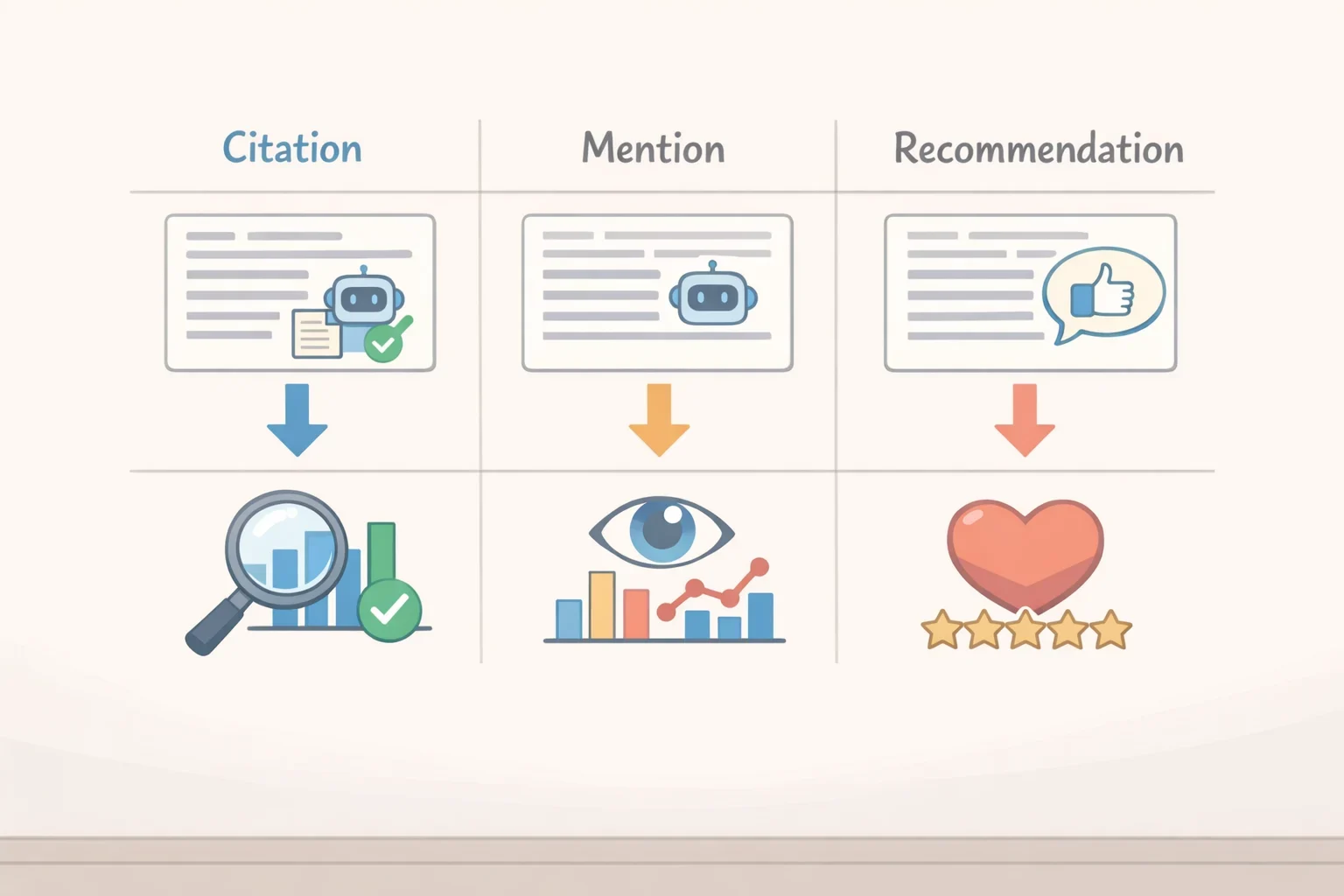
Three distinct types of AI presence require different measurement approaches: a citation, where the AI links to specific content; a mention, where it names the brand without a link; and a recommendation, where it actively positions the brand as the answer to a user's need. First position in a recommendation list carries meaningfully higher commercial weight than a passing mention, per AudFlo. Tools that collapse all three into a single visibility score discard information that matters.
Sentiment compounds the difficulty. How a brand is framed in AI responses, positively or negatively, shifts roughly 6.7 times more often than whether it appears at all, per ResearchGate. Monitoring appearance rate alone misses something important.
Platform behavior also varies in ways that change where optimization effort should go. ChatGPT without web search draws on training data, so brands that became prominent after a model's knowledge cutoff may not appear in those responses at all. Google AI Overviews pulls heavily from the Knowledge Graph and indexes sites with established E-E-A-T signals. Perplexity is a real-time retrieval system that shows its sources explicitly, making it the most responsive to recent content changes, per AudFlo. Rolling all three into one score doesn't just lose precision; it obscures which levers actually apply where.
The measurement framework that emerges from the research is layered by cost and confidence. Continuous weekly tracking should cover Share of AI Voice, brand mentions divided by total category mentions across a prompt basket of 20-50 queries, plus branded demand lift via Search Console. Quarterly, direct-traffic decomposition adds context. Annually, a geo or content holdout test provides the closest thing to causal evidence currently available, per The SEO Consultant.ai. That stack reflects what the research says is the honest minimum for reporting how e-commerce brands appear in ChatGPT, Perplexity, and Google AI Overviews without overstating what the data can actually support.
The measurement market is forming before the standards are set

The AI referral traffic numbers are growing. The visibility gap between large and small brands is steep and, based on current evidence, self-reinforcing: the ResearchGate study found that visibility correlated strongly with brand maturity, a pattern that compounds over time as models continue training on internet data that reflects existing brand prominence. The tools claiming to track all of this are arriving before anyone has agreed on what good attribution looks like.
That timing creates a real risk. Vendors face strong incentives to overstate what their platforms can deliver. The useful questions are specific: does the tool track citation, mention, and recommendation as separate signals? Does it benchmark against competitors rather than just report absolute mention rate? Does it distinguish platform behavior rather than aggregate everything into one score? Does it represent its outputs as directional rather than deterministic?
A platform that answers those questions clearly is operating within what the research says is actually measurable. One that promises stable AI rankings or guaranteed placement is selling something the underlying technology doesn't support. With 39% of U.S. consumers having already used generative AI for online shopping, per Adobe Analytics, and that share still climbing, the brands that establish a measurement baseline now will at least have historical data to evaluate whether anything they do next actually changed their position. That's a lower bar than most vendors are pitching. It's also the honest one.
