

- How Meta AI Ads for Brands Are Shifting Creative Control
- How Meta is building toward full ad automation
- What Meta's automation actually changes day to day
- Why Meta AI ads for brands are triggering backlash
- The third-party connector option and its limits
- Disclosure rules are arriving before brands have a framework
- What to do before August
How Meta AI Ads for Brands Are Shifting Creative Control
Meta is pushing toward a future where brands hand over their entire ad operation to artificial intelligence. Several already have, at least in part and some are now publicly complaining about what the platform did with that access.
The complaints are specific: creative modified without approval, AI features re-enabling after being switched off, and ad budgets quietly routed toward Meta-generated content that brands never requested. That tension is landing just as disclosure rules tighten in the US and EU. For marketers running Meta AI ads for brands, the question is no longer whether to engage with the platform's automation, but how much of it is actually under their control.
How Meta is building toward full ad automation
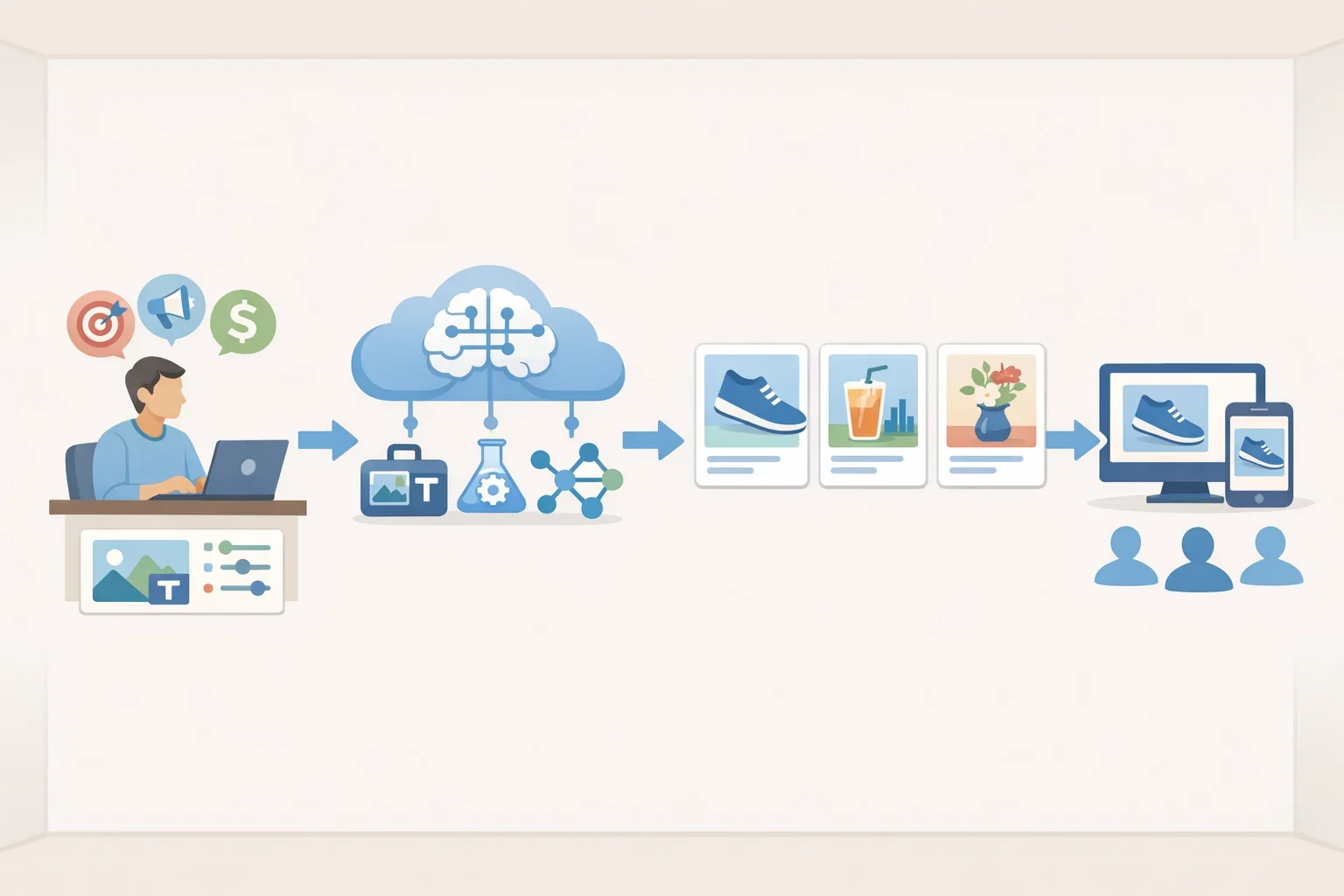
Mark Zuckerberg's stated vision is simple: advertisers enter a credit card number and a business goal, AI handles the rest. According to Marketing Brew, which reported on Meta's direction three months ago, that scenario could arrive as soon as the end of 2026.
The infrastructure is already being built. Meta's Andromeda ad retrieval system, rolling out since late 2024, has overhauled how ads are matched to users, shifting away from the traditional model of targeting fixed audience segments. Advantage+ now covers creative, targeting, and budget decisions. Some advertisers have also begun noticing Manus the AI agent Meta acquired in December, whose purchase has drawn regulatory scrutiny in China surfacing inside Ads Manager, per Marketing Brew.
The net effect for campaign teams is broader audiences, fewer ad sets, and less manual configuration. "Meta has been trying to automate media buying through simplifying the process, keeping audiences broad, giving advertisers less control and levers to restrict our targeting, and recommending less ad sets per campaign," Aaron Edwards, founder and CEO of The Charles Group, told Marketing Brew.
What Meta's automation actually changes day to day
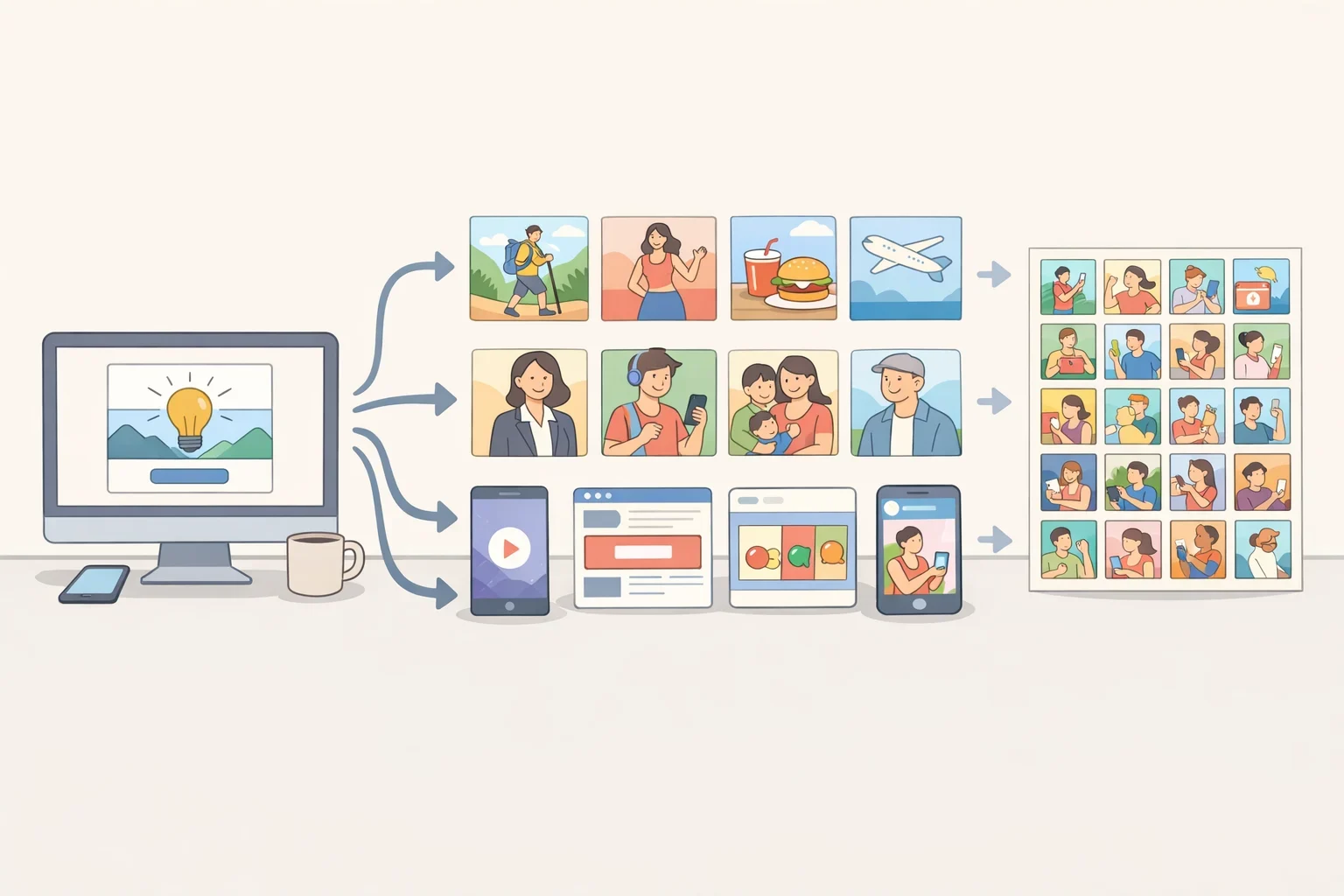
Andromeda has also changed what advertisers are expected to produce. Rather than pairing a specific ad to a defined audience segment, the system rewards creative volume and diversity marketers supply a wide range of distinct concepts, the algorithm decides what runs to whom. Edwards described a client request for 300 unique assets under a single concept; by the time his team built it out across four target personas with five concepts each, the campaign required 1,000 individual creative assets, according to Marketing Brew. The human workload expanded significantly as the human decision-making narrowed.
Advantage+ adoption is high but uneven in its results. At Hawke Media, Advantage+ now accounts for 60–70% of the agency's Meta spend. But Hawke Media SVP Jeremy Schulkin flagged a persistent problem: the automation steers campaigns toward lower-quality placements and lower-engagement demographics and regions, reducing returns even as adoption grows, per Marketing Brew. Meta spokesperson Alisha Swinteck attributed a 14% improvement in ads quality on Facebook in Q3 last year to Andromeda changes, though that figure comes from Meta and has not been independently verified.
On manual overrides, Meta's position is officially neutral. Swinteck told Marketing Brew that advertisers are not penalized for opting out of AI features. But she also acknowledged that campaigns applying manual controls beyond certain thresholds may shift to an "Advantage+ off" state, at which point the system may prompt advertisers to re-enable automation because, as she put it, "our data shows that automation delivers stronger results for most advertisers." Hayley Owen, SVP and group media director at Deutsch, described the broader challenge of managing Meta's settings as playing "Whac-A-Mole" constantly investigating new features the platform had quietly switched on, per Marketing Brew.
Why Meta AI ads for brands are triggering backlash

The control problem becomes a brand-safety problem when AI modifies what customers actually see.
Clothing brand Snag Tights started noticing AI-generated tweaks to its Meta ad creative last summer. By February, its CEO Brie Read had published a direct message to the brand's audience: "If you see an ad from us that looks 'off' or has that strange AI sheen, please know: It isn't us." Read raised a harder question with Marketing Brew: "If the picture isn't of anything real, you're effectively scamming the customer, right?" Snag Tights has since requested Meta disable AI testing on its account and is exploring ad spend on Reddit, TikTok, Substack, and podcasts.
The distortion problem is not isolated. Curtis Howland, VP at Misfit Marketing, described AI modifications to an outdoor patio client's ad that stretched the image until grass appeared to grow on top of the furniture. Agency Formada Social reported a different problem: AI features re-enabling after being manually switched off. "Even when we duplicate approved ads, AI features re-enable themselves, generate new visuals, and override decisions that were already made," co-founder Meghan Kelly wrote in a LinkedIn post, describing the process as a "wild goose chase," per Marketing Brew.
Budget allocation is where the problem gets financial. Marketing Brew reported that some advertisers found spend automatically directed toward AI-generated creative testing they had not requested. Snag Tights confirmed that a portion of its ad budget went to Meta-generated content against its wishes. That outcome is consistent with how the platform's defaults are designed to function.
Meta's formal response: since this past March, opt-outs from Advantage+ creative are saved persistently rather than reverting to default opt-in, and advertisers can disable AI testing in account settings per Marketing Brew. Howland noted it can be challenging to find the correct toggles. The gap between what Meta's spokesperson describes and what agencies are actually experiencing has not closed, and the documented complaints are now public.
The third-party connector option and its limits
Two and a half months ago, Meta opened its ad ecosystem to third-party AI tools including ChatGPT and Claude through a new connector program, available in open beta to eligible advertisers globally, according to Digiday. Agency executives called it a genuine workflow improvement for a platform that has always been manual at scale.
The practical ceiling is narrower than it appears. Tucker Matheson, co-founder and co-CEO of Markacy, said the connectors will add value for performance analysis and creative testing, but not for optimization "as Meta's AI and algorithm will always be paramount," per Digiday. Optimization is precisely the area Meta is least likely to open to outside control.
Jacob Bourne, technology analyst at eMarketer, put it plainly: "It's an opening up, but it's also a subtle lock-in move," per Digiday. More workflows integrated into Meta's ecosystem deepen dependency, even when advertisers feel they are gaining flexibility. The connectors expand production options. They do not restore creative authority over what the platform's own automation does with those inputs.
Dollar Shave Club's approach illustrates what brand-controlled AI looks like in practice. Its in-house team used Claude and Higgsfield AI to produce a fully AI-generated July 4th campaign in about three weeks, according to Modern Retail. The campaign was transparent about its AI origins integrating famous paintings as an obvious creative device. Marketing director Higgins described the principle directly: "We are using AI as a tool rather than a strategy of trying to trick people into thinking something is real." The distinction is human oversight at every step, not delegating creative decisions to the platform.
Disclosure rules are arriving before brands have a framework
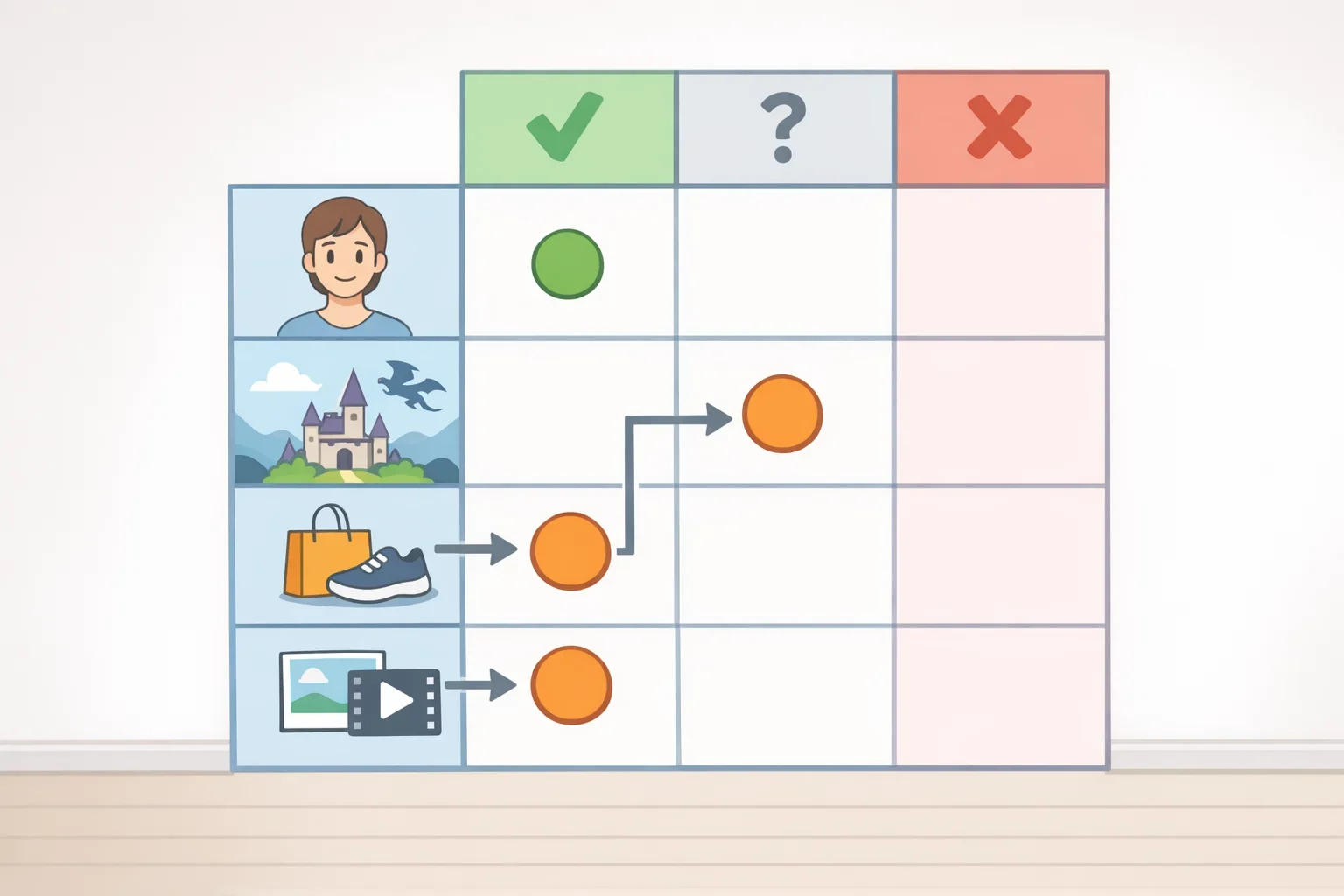
Brands are navigating fast-changing and uneven disclosure requirements, without much clarity on how those rules apply to platform-generated ad modifications specifically.
More than three in four global brands are already using AI-generated or AI-enhanced content in consumer-facing marketing, WFA research found three and a half months ago. Yet 61% report fragmented or unclear regulatory obligations, and 46% are uncertain about consumer expectations. Only 67% have developed internal rules of their own.
Disclosure expectations vary sharply by type of content. The same WFA research found that 96% of brands believe an AI-generated voice that audiences might assume is human should be disclosed, and 91% say a synthetic human in a central role should be labeled. But only 4% think AI-generated decorative backgrounds require disclosure. Meta's automated modifications which can alter product images, backgrounds, and convert static content to video sit in the middle of that spectrum, where no clear line has been drawn.
Regulation is arriving regardless. The EU AI Act will require labeling of AI-generated "deep fakes" from August 2026. New York State recently passed a law requiring advertisers that use generative AI to disclose it. California and China have their own frameworks in development, per WFA and Modern Retail. Most of these laws do not define how transparency obligations apply in a marketing context, leaving significant room for interpretation which means brands whose Meta AI settings have re-enabled without their knowledge may need to assess whether those ads meet disclosure requirements they had no role in creating.
With legal clarity lagging, platforms are filling the gap. WFA noted that Meta, Google, TikTok, and others have begun defining their own disclosure approaches, effectively acting as de facto regulators. For brands with exposure in New York or EU markets, what Meta does by default is now a compliance question, not just a campaign one.
What to do before August
The EU deadline is five weeks out. If Meta's tools have modified product imagery or generated synthetic creative running in EU markets, brands need to confirm whether disclosure is required and whether Meta's current account settings address that or leave it unresolved. The WFA guidance published earlier this year offers a practical starting framework.
Beyond compliance, the operational issues Snag Tights, Formada Social, and Misfit Marketing described require active account management. AI settings in Meta are not stable they re-enable in duplicated campaigns, surface in new forms without announcement, and can draw on ad budgets without explicit authorization. Opt-outs need to be verified, not assumed. Any creative going to customers, including background alterations or static-to-video conversions initiated by Meta, benefits from a human review step before it runs.
The broader question that remains open is not one brands can resolve through settings alone. Meta's automation defaults are built to expand. The connector program gives brands more production tools but leaves the algorithm in charge of what actually gets distributed and to whom. Agencies can test third-party AI, audit settings, and document opt-outs but the optimization layer stays with Meta, and that is precisely where the fight over control will keep playing out.
