

Adstra's ID Connection Strength: What It Measures and What's Missing
Adstra has launched ID Connection Strength, a proprietary scoring framework that rates how reliably a programmatic identifier connects to a verified person or household, according to the company's announcement. The framework targets CTV advertising environments. Key details buyers would need to act on the score, including scoring thresholds, whether scores are available before campaign commitment, named launch partners, and early customer results, do not appear in the launch materials reviewed for this article.
What Adstra says the framework scores
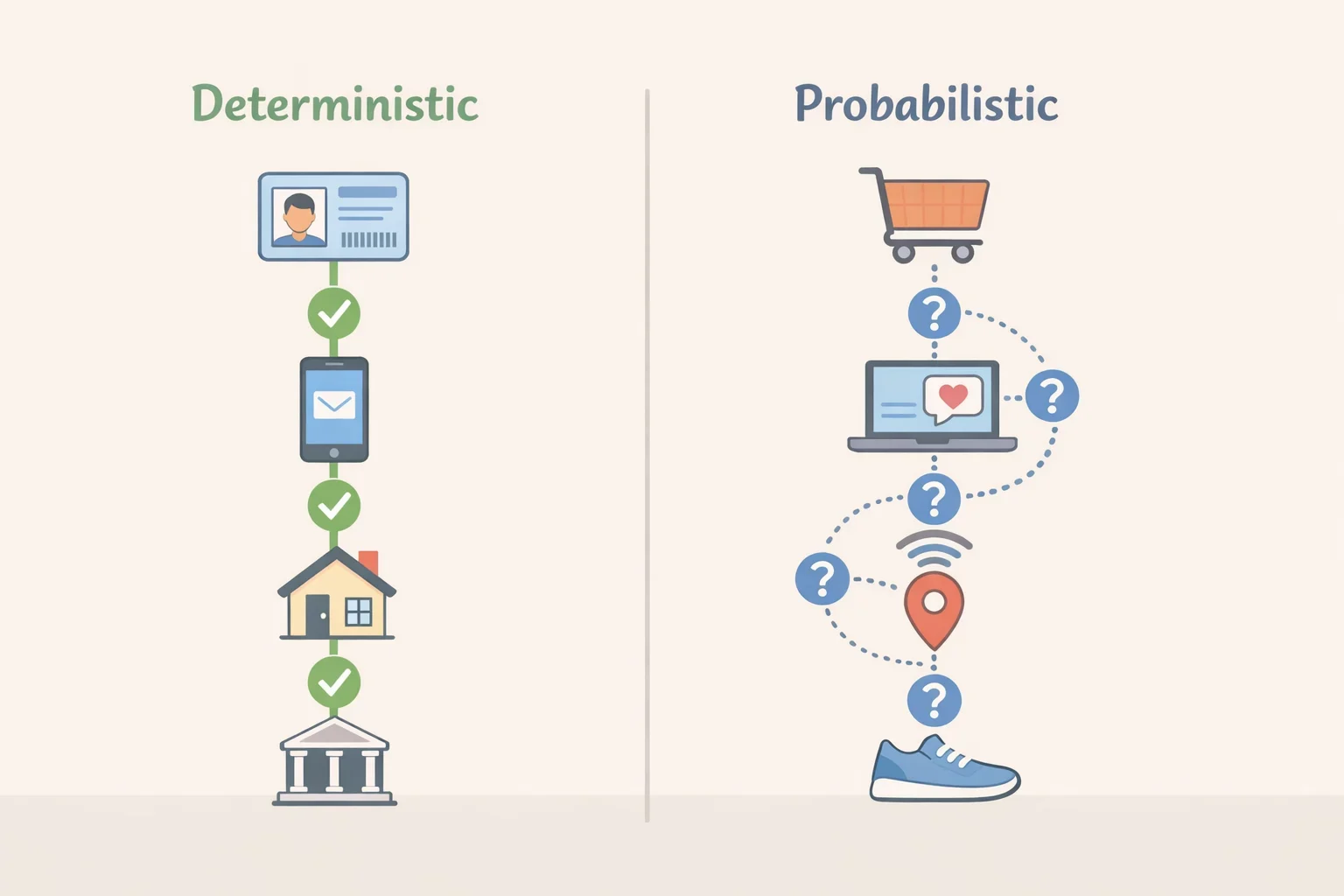
The company's core argument is that the metrics most commonly cited in data partner evaluations describe coverage without describing accuracy. Match rate counts how many records in a target segment can be linked to a programmatic identifier. Addressable scale counts how many of those identifiers are reachable. Neither, Adstra contends, indicates whether the underlying connection is correct.
ID Connection Strength is designed to score each identifier on the strength of the evidence chain behind it. According to the company, the framework distinguishes two types of links. A deterministic link, as Adstra defines it, traces a device ID through a confirmed record, such as a verified email address, a postal address, or a household registration, to a specific person or household. A probabilistic link infers the connection from behavioral signals or shared network patterns: a device clustered within a demographic model, or an IP address associated with a large building matched to a demographic profile. Both types produce a technical match; Adstra's argument is that only the deterministic path carries an evidentiary foundation rather than an inference.
The company says the scoring is anchored in its offline consumer data infrastructure. The stronger the chain of verifiable records behind an identifier, Adstra says, the higher the connection strength score assigned to it.
What the announcement does not include
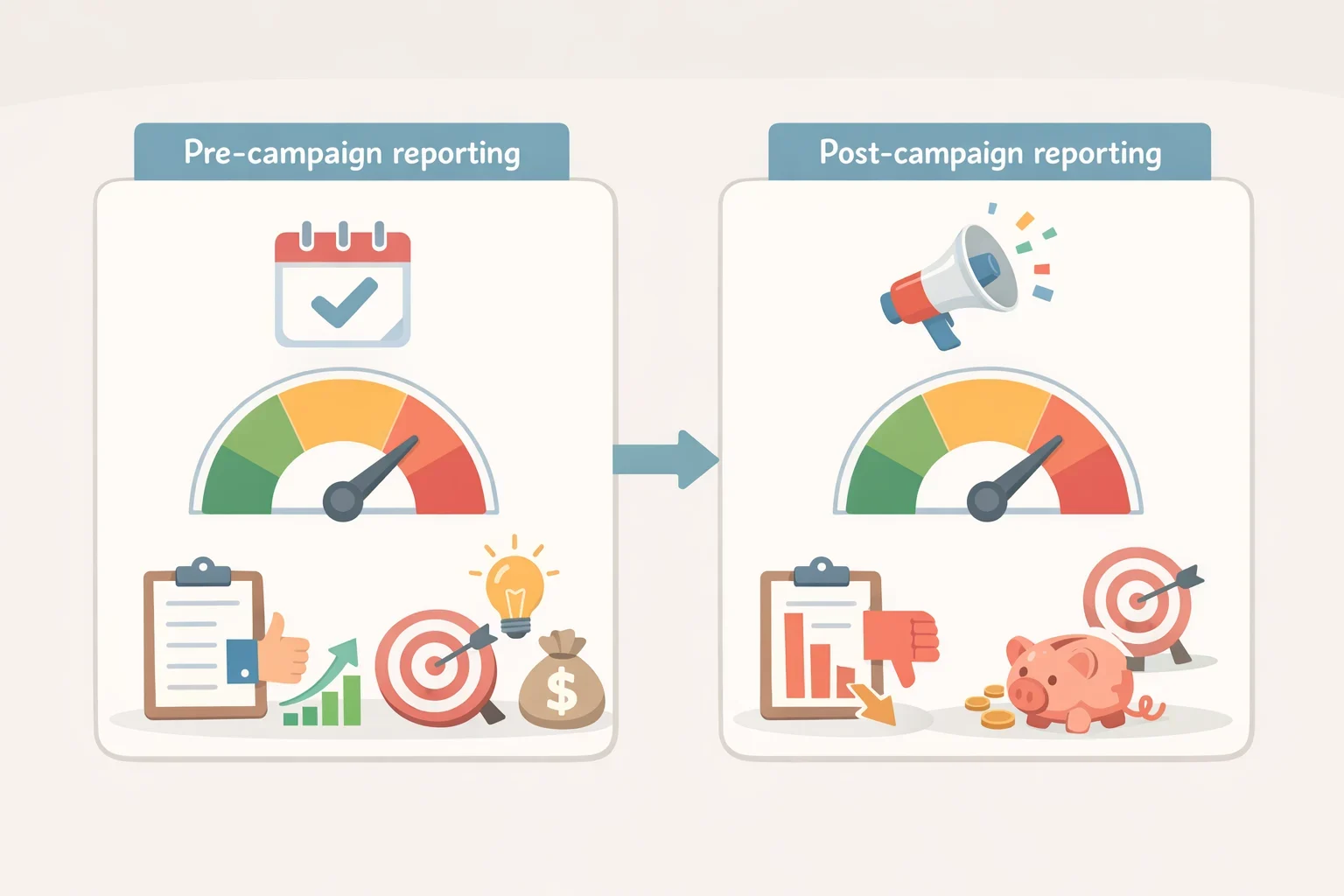
The launch materials do not define what qualifies as "high" or "low" connection strength. Without disclosed thresholds, the score functions as a relative ranking inside Adstra's own data environment, with no fixed reference point a buyer can audit independently.
The company has not confirmed whether scores are available at the segment level before campaign commitment or only in post-campaign reporting. That distinction has direct operational consequences. A pre-campaign score can shape targeting and budget allocation. A post-campaign score can inform future vendor evaluation but cannot drive decisions in the current campaign.
No named partners or customers appear in the launch announcement. No external validation of the score's predictive accuracy has been provided. Cross-vendor comparability is also off the table by design: the framework benchmarks identifier quality within Adstra's own data environment and cannot be used to evaluate a different vendor's identity graph on equivalent terms.
The buying problem the framework addresses
Adstra describes a trade-off buyers encounter regularly: one data partner offers broad reach at a high match rate; a second offers a smaller addressable segment with stronger identity evidence behind it. The company's argument is that buyers currently have no standardized way to make that comparison deliberately, because evidence quality behind identifiers is not routinely disclosed.
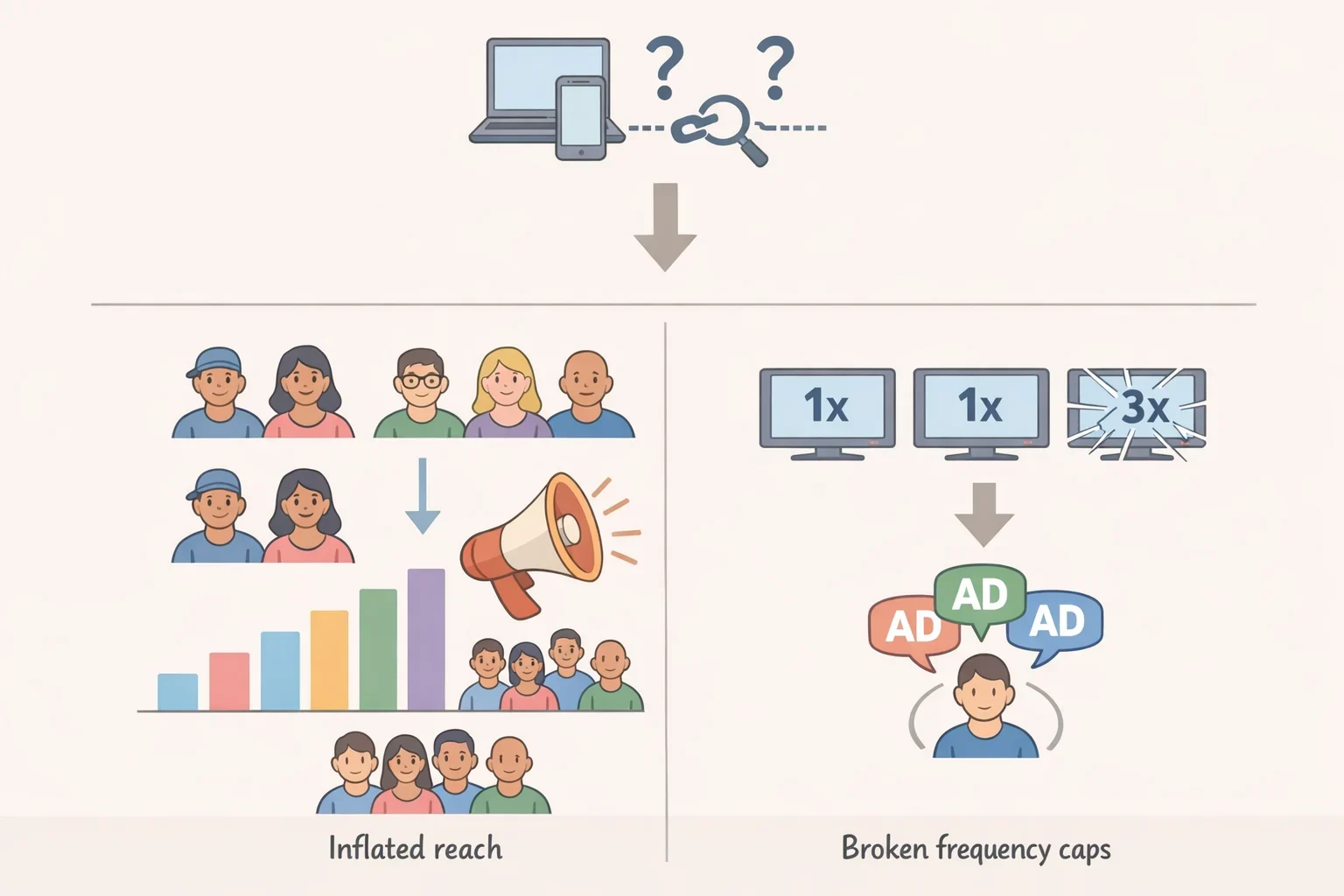
Weak identity links create concrete operational problems that match rate alone does not surface, according to the company. Two device IDs in the same household counted as separate individuals inflate reach figures. Frequency caps break when the same person appears under multiple identifiers. Impressions reach the wrong household when a probabilistic inference was incorrect. These problems show up in campaign performance, Adstra says, but only if someone is measuring for them.
The company frames CTV specifically as the environment where these gaps are hardest to detect. Because the environment operates without cookies, Adstra says, the signal environment is less familiar and buyers lack a standard tool for evaluating what sits behind a proposed segment. That framing comes from Adstra's announcement; no independent market data was available to this article to verify it.
Questions any vendor using this language should be able to answer

The framework introduces terminology that other vendors may adopt regardless of whether their methodology supports it. Buyers evaluating any connection strength claim need answers to a consistent set of questions before treating a score as a planning input.
How "deterministic" and "probabilistic" are defined matters as much as the score itself. Classification rules are where the audit starts, because a link one vendor calls deterministic may qualify only as probabilistic under another's criteria. Data freshness is a related issue: a confirmed record that has not been updated in several years is functionally different from one verified against a current source. Vendors should be able to say when underlying records were last refreshed and how stale records are handled.
The reach question is practical. If filtering a segment for high-connection-strength records materially reduces addressable scale, buyers need to know that before committing budget. Pricing works the same way: if high-strength inventory carries a CPM premium, the rate differential and its justification belong in the proposal, not disclosed after commitment.
Vendors who respond to these questions with specific thresholds, defined methodology, and replicable criteria are offering something that can be evaluated. Vendors who respond with general assurances and range claims are presenting a marketing position labeled as a metric. By that standard, Adstra's own framework has not yet answered several of these questions in its public materials.
What this launch changes
Adstra has established that it is treating identity connection quality as a scoreable, disclosable attribute rather than a secondary consideration behind reach. If that framing takes hold in vendor conversations, it shifts what buyers can reasonably demand as evidence from any data partner asked to justify identity quality, not only from Adstra.
What the announcement does not establish is whether ID Connection Strength is ready to function as a procurement input. The framework has a coherent internal logic and an incomplete public record. Scoring thresholds, confirmed pre-campaign availability, and independent validation are still missing. Buyers who find the questions the framework raises useful, and there are good reasons to, should watch what Adstra discloses next before treating the score as anything more than a structured conversation starter.
