

- Venture Debt for AI and Spacetech Startups: Lender Criteria Explained
- What changed in lender underwriting: from growth story to collateral logic
- The practical underwriting screen: what lenders actually want to see
- Why venture debt for AI and spacetech startups is expanding
- Spacetech: where the lender logic applies partially, and what's still missing
- What to watch, and who actually benefits
Venture Debt for AI and Spacetech Startups: Lender Criteria Explained
Venture debt hit a record $68.8 billion in the U.S. in 2025, with deal volume holding steady at roughly 1,000 transactions. That stability in deal count matters: it points to broad adoption rather than a handful of outsized deals distorting the headline number (Runway Growth, May 2026). Venture debt for AI and spacetech startups is now a central part of that story, and understanding why requires looking at what changed in lender underwriting, not just what changed in the market.
The equity picture is the right place to start, because it explains the pressure debt is absorbing. U.S. venture investment reached $321.6 billion last year, but half of all capital flowed into just 0.05% of transactions. AI alone absorbed nearly 64% of deal value (Runway Growth, May 2026). For companies not in that narrow tier, equity is either inaccessible or too expensive to deploy at infrastructure scale. Debt is filling that gap, but not indiscriminately. Lenders are getting comfortable with frontier sectors when borrowers can offer hard assets, contracted revenue, or enough scale to make recovery realistic in a downside scenario. That logic explains who wins access to debt, and on what terms.
What changed in lender underwriting: from growth story to collateral logic

Venture debt used to function mainly as a runway extender, a way to bridge between equity rounds without diluting founders too early. That framing undersells what the instrument has become. Runway Growth describes it as having moved "from the margins of the venture ecosystem toward its core," operating as a structural pillar rather than a backstop (Runway Growth, May 2026).
The evidence for that shift is concrete. Equity raised after a debt round jumped from $4.7 billion across 129 deals in 2024 to $12.3 billion across 156 deals in 2025 (Runway Growth, May 2026). Companies are increasingly using debt to strengthen their position before returning to equity markets, not to avoid them.
What enabled this evolution was a change in how lenders price risk. Rather than relying on sponsor relationships or growth momentum, lenders now price risk directly into rates, covenants, and collateral structure. Nathaniel Stone of Stifel described the framework: "Lenders can get comfortable with things like path to probability, liquidity versus debt, depending on the situation of growth" (Runway Growth, May 2026). That's lender-speak for a disciplined checklist, and the market's shape reflects exactly that discipline.
The median venture debt deal reached $5.5 million in 2025; the 75th percentile climbed to $27.7 million. Average late-stage deals hit $68.2 million in Q1 2026 (Runway Growth, May 2026). The distribution is wide because the borrower pool is stratified. Companies with strong underwriting profiles get large, flexible facilities. Those without get either nothing or heavily collateralized structures. Runway Growth's own assessment is explicit: debt remains "selective and unevenly distributed across borrower types" (Runway Growth, May 2026).
The practical underwriting screen: what lenders actually want to see
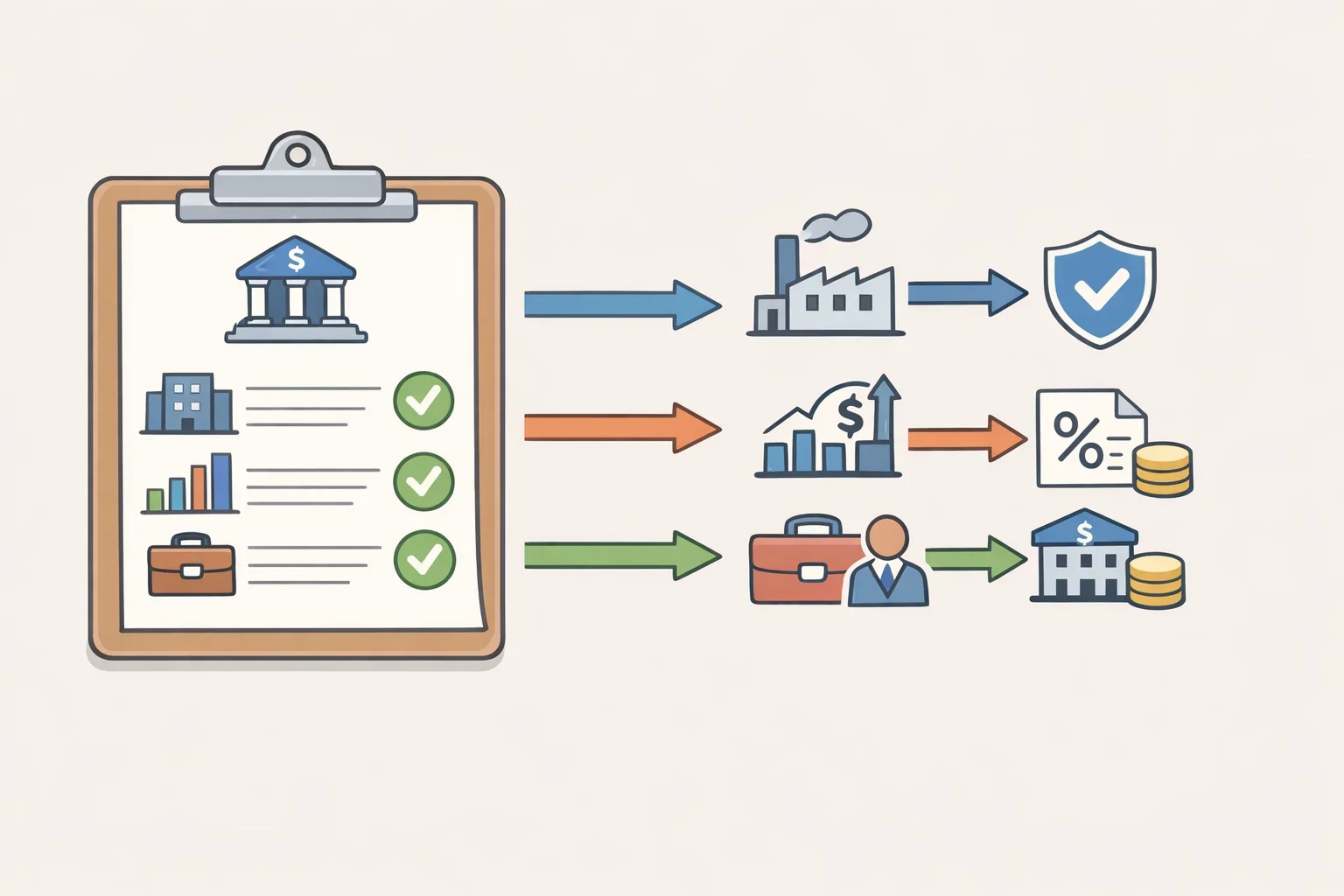
The shift toward collateral logic translates into a fairly concrete set of screens. Knowing where a company sits against each one determines not just whether it can access debt, but what kind.
Hard assets are the clearest underwriting hook. Physical infrastructure with identifiable resale value, such as compute hardware, satellites, or manufacturing equipment, gives lenders a recovery path if a company fails. Software and intellectual property can count as collateral, but terms get tighter. A $5 million note documented in a 2026 SEC filing required a security interest in substantially all of the borrower's assets, including IP, with default remedies triggering after just 30 days of non-compliance (SEC filing, 2026). That's not a closed door. It's a lender compensating for thin collateral with maximum contractual protection.
Contracted or recurring revenue matters because it makes the debt service schedule modelable. A government contract or a multi-year enterprise agreement tells a lender that cash flow will exist on a predictable cadence. Speculative or milestone-dependent revenue does not give a lender the same comfort, regardless of how compelling the growth story sounds.
A credible path to liquidity is the third leg. Lenders need confidence that repayment is achievable within a defined horizon, which typically means the borrower is either approaching an IPO, a secondary transaction, or a point at which recurring revenue makes refinancing straightforward. Absent that visibility, a lender extending a large facility is essentially making a bet with an unclear exit.
Scale underpins everything. Recovery in a downside scenario has to look realistic relative to the loan size. A small company pledging assets worth less than its debt principal is a fundamentally different risk profile than a large company with substantial infrastructure and demonstrated revenue. That gap explains why average late-stage deals now run into the tens of millions while the median sits at $5.5 million (Runway Growth, May 2026).
Why venture debt for AI and spacetech startups is expanding

AI is where this lender logic plays out most visibly. Training frontier models requires datacenters, chips, and power infrastructure. These are physical assets with identifiable collateral value and predictable procurement costs. Using equity to fund them means selling ownership at a company's highest-growth moment. Debt preserves that ownership while still financing the build.
Kyle Stanford, director of VC research at PitchBook, put it plainly: the shift toward late-stage debt is directly tied to AI's growth and "the need for debt financing for things like datacenters or chips, which equity would be too expensive" (Runway Growth, May 2026). Late-stage venture debt hit a decade high in Q1 2026, with growth-stage companies capturing 67%, or $13.3 billion, of all U.S. venture debt dollars in that quarter (Runway Growth, May 2026).
The largest borrowers illustrate the scale. SpaceX's total debt reportedly rose from approximately $14 billion in 2024 to $23 billion last year, alongside more than $10 billion in equity. OpenAI has raised around $186 billion in equity and $4 billion in debt. Anthropic has raised approximately $69 billion in equity and $2.5 billion in debt (Runway Growth, May 2026). The debt-to-equity ratios look conservative by industrial standards. The absolute figures, though, mean lenders are building substantial exposure to a very small number of companies. Some investors are already flagging this as a concentration risk, with concern mounting about the scale of loans concentrated in a handful of AI companies (Runway Growth, May 2026).
The contrast at the smaller end of the market sharpens the point. The SEC filing cited above shows what lender logic looks like when collateral is thin and revenue uncertain: a one-year, $5 million note with a blanket security interest across substantially all assets, IP included. That structure isn't punitive by design. It's what the math requires when there's no datacenter to seize and no government contract to model. Companies with those things get fundamentally different terms.
Spacetech: where the lender logic applies partially, and what's still missing

Spacetech has historically resisted debt financing for structural reasons. Development timelines stretch across years, upfront costs are enormous, and revenue can take a decade to stabilize. Sara Jones of In-Q-Tel framed the problem: space companies require "years of support before technical risk is reduced and revenue stabilizes," and patient capital, including government funding, remains essential to bridge that gap (SpaceNews, February 2026). Mike Collett of Promus Ventures was blunter about the capital arithmetic: "The amount of capital that is needed far exceeds the equity pots that early-stage companies have available" (SpaceNews, February 2026).
What's changing is that maturing space companies are developing the contractual and revenue foundations that make the underwriting logic work. Alexis Sáinz of Hogan Lovells identified the specific mechanism: long-term revenue agreements, particularly government contracts, and the ability to monetize those commitments are the key to "unlocking debt and larger pools of institutional capital" (SpaceNews, February 2026). Robert Benton of Space Leasing International, which is building an aviation-style satellite leasing model, made the point simply: "Government contracts, that's your gold standard" for collateral underwriting in the sector (SpaceNews, February 2026).
Global spacetech investment has held above $6 billion annually for at least two consecutive years, supported by defense spending, geopolitical realignment, and rising demand for geospatial AI applications (Crunchbase, April 2025). BryceTech analysis shows non-venture investment in space startups reached its highest level since the 2021 SPAC wave in 2025, this time driven by traditional IPOs and greater reliance on debt rather than blank-check vehicles (SpaceNews, February 2026). The direction is credible. The scale remains unquantified: there is no clean public dataset showing sector-specific venture debt volumes for spacetech, so the BryceTech reference is the closest available proxy.
On dual-use: the strategic demand is real. Europe's ReArm initiative could direct up to $870 billion into defense-related spending (Crunchbase, April 2025), and In-Q-Tel's involvement signals national security relevance. But dual-use is better understood as an emerging extension of the AI and spacetech debt trend than a proven category with its own financing infrastructure. The underwriting logic would apply, given contracted government revenue and hard assets. The evidence base for claiming it's already happening at scale doesn't yet exist.
What to watch, and who actually benefits
Venture debt-backed companies accounted for 37% of total exit value in 2025, a year when exits generated $286.9 billion overall (Runway Growth, May 2026). That's not the profile of a niche instrument. Debt has structurally expanded, and the frontier shift is real. The harder question is where it goes from here.
Three dynamics are worth tracking. First, whether lenders broaden access beyond top-tier borrowers. The market is currently bifurcated: large, flexible facilities for companies that clear the full underwriting checklist, heavily collateralized structures for those that don't. A genuine expansion of debt into frontier tech would require lenders to get comfortable with companies that have government contracts but limited hard assets, or hard assets but uncertain revenue timelines. That would represent a meaningful shift in risk appetite, and there's no clear evidence it's underway.
Second, whether government-backed contract finance becomes the bridge mechanism for space and dual-use companies that can't yet access conventional venture debt. The aviation-style leasing model that Space Leasing International is building points in this direction: treating long-term government commitments as financeable assets, not just background creditworthiness. If that model proves out, it could unlock a category of borrowers that currently fall into the gap between equity and debt.
Third, whether concentration risk at the top of the AI debt market becomes a stress point. A small number of AI companies are absorbing very large facilities, and the exposure is starting to draw scrutiny (Runway Growth, May 2026). Whether that exposure is well-structured, or whether it becomes the defining stress test for venture debt's expanded role, depends on how the underlying AI companies perform over the next several years. That's an open question, not a settled one.
For founders in AI, space, and defense-adjacent technology, the practical picture is straightforward even if the market isn't. Access to debt, and the terms attached to it, comes down to four things: recurring or contracted revenue, identifiable hard assets, a credible path to liquidity, and enough scale that recovery looks realistic. Companies that can demonstrate all four are finding facilities larger and more flexible than at any point in the past decade. Those that can't are either excluded or accepting terms that leave almost no room for operational error.
