
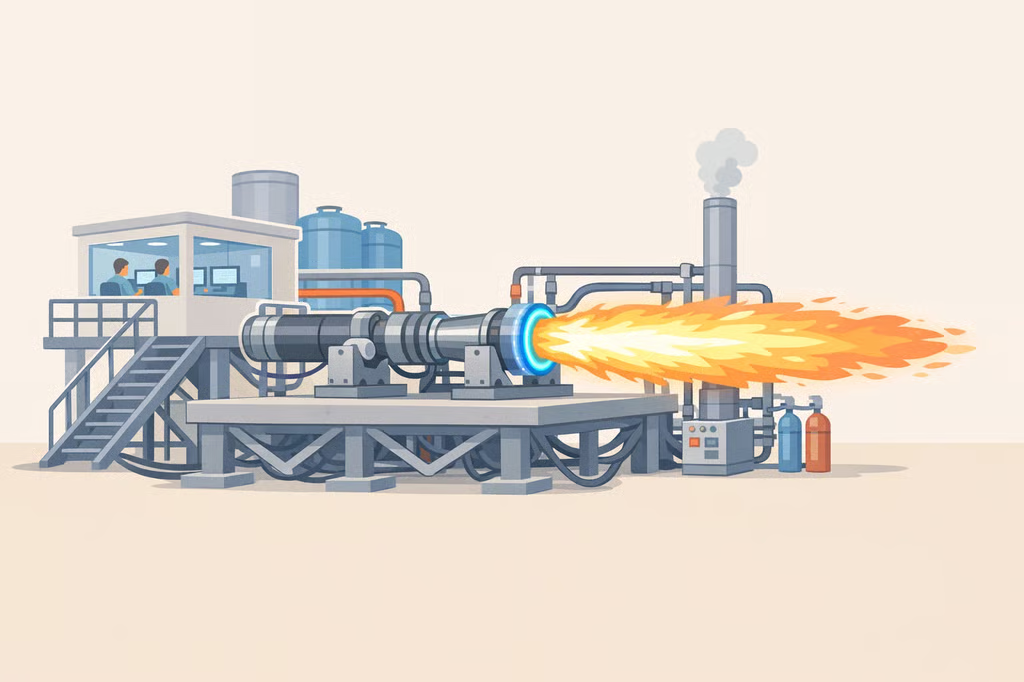
Venus Aerospace M Series B: Flight-Proven Engine Faces Endurance Test
Venus Aerospace raised $90 million in a Series B round announced today, roughly fourteen months after its rotating detonation rocket engine became the first of its kind to launch a rocket into flight. The Venus Aerospace $90M Series B is directed at testing and development work on specific vehicle designs with potential customers, TechCrunch reported. The engineering challenge that capital has to solve: across 600 tests, the longest the company has sustained a burn is 32 seconds, and it will likely need to reach six to fifteen minutes to meet customer requirements, per TechCrunch.
The round was led by Mercury Fund, with participation from Lockheed Martin Ventures, MESH, PEAK6, Draper Associates, Starboard Star Venture Capital, and Green Sands Equity, TechCrunch reported. The company has now raised more than $106 million in private funding since its 2020 founding, SpaceNews reported last October.
From concept to flight: how the Venus Aerospace funding story developed
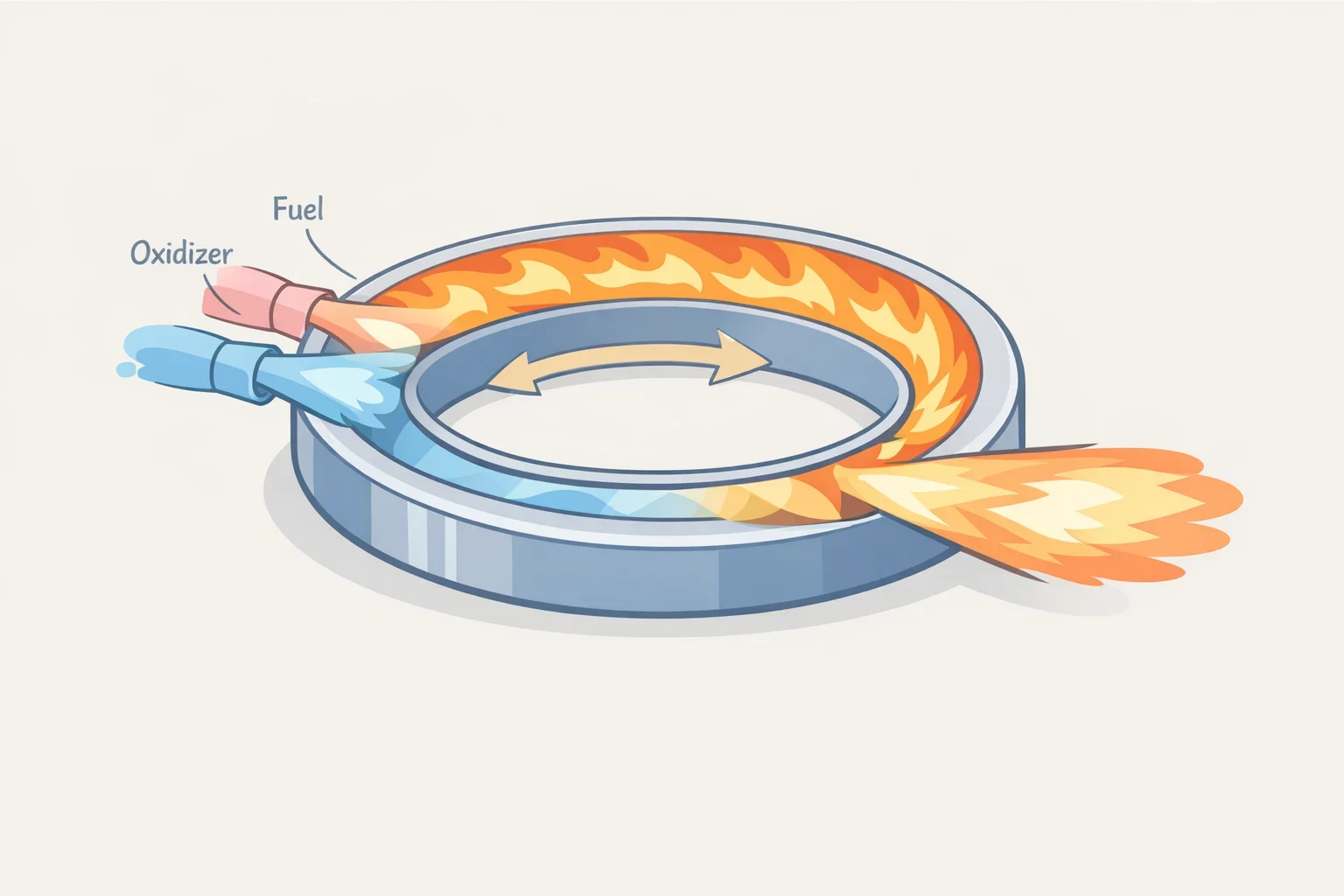
The RDRE concept dates to the mid-20th century. Rather than burning propellants in a conventional combustion chamber, the engine creates a continuous supersonic detonation wave that rotates through a ring-shaped channel. The idea promised to waste less propellant, but the complex physics proved tricky to understand and control, TechCrunch reported. Advances in 3D printing and better simulation tools changed that in recent years.
Venus's development followed an incremental path across five years. The company's first working test ran in 2020 at the University of Central Florida. In February 2024, a 2.4-meter-long drone equipped with a lower-thrust RDRE variant was released from a modified fighter jet at 12,000 feet, reaching Mach 0.9 and flying for under a minute, Aerospace America reported last May. That was a different category of validation than what came next.
The May 2025 launch at Spaceport America in New Mexico was the first time an RDRE launched a rocket into flight, TechCrunch confirmed. The engine produced 1,600 to 2,000 pounds of thrust, burned for seven seconds, and drove the rocket to roughly 1,340 meters at 4-g acceleration before the vehicle was recovered intact via parachute, Aerospace America reported last May. For context: NASA demonstrated an RDRE on the ground in 2022, and JAXA fired one briefly in space in 2021. Neither launched a rocket.
CEO Sassie Duggleby traced the company's central engineering problem back to the beginning. "When we first started Venus, the entire story was there's a new type of rocket engine, we think it's going to put out more heat and more thrust and be more efficient, but we think we know how to keep it from melting," she told TechCrunch. "That's been a lot of what our work has been over the last four years how do we keep this engine from melting and we've solved that."
Venus says its RDRE has demonstrated efficiency placing it in the upper 90th percentile of standard rocket engines, according to Aerospace America. The open questions now are durability and scale, not combustion physics.
Why the Venus Aerospace $90M Series B followed its 2025 RDRE test

Venus was founded in 2020 by CEO Sassie Duggleby and CTO Andrew Duggleby to develop hypersonic passenger aircraft. That goal, a reusable vehicle called the Stargazer M4, is still on the roadmap. It is not what the 2026 capital raise is for.
After the May 2025 flight, potential customers came to the company. "What happened when we flew last May is the world looked at us and said, 'oh my gosh, you have a working RDRE, would you sell us one?' And that wasn't what we were expecting," Duggleby told TechCrunch. Venus is now targeting hypersonic weapons development, replacing solid rocket motors in munitions and rockets, and high-speed space vehicles with military applications, TechCrunch reported.
The investor composition reflects that orientation. Lockheed Martin Ventures took an undisclosed strategic stake last October, then returned to join the Series B syndicate, SpaceNews reported last October. A defense prime investing twice signals sustained technical and commercial evaluation, not a one-time speculative bet. Venus also counts NASA and U.S. Air Force support in its prior backing, and the Texas Space Commission awarded the company $3.9 million to build a rocket engine test facility in Houston, SpaceNews reported last October.
None of that confirms signed customer contracts, which Venus has not disclosed. What Duggleby said in a statement last October was that the company is "experiencing strong demand signals for multiple applications" and sees "clear demand from across the defense ecosystem for Venus engines to power a wide range of munitions and drones," per SpaceNews.
Andrew Duggleby framed the commercial case in a statement reported today: "Our propulsion architecture combines efficiency, throttling, reusability and manufacturability in a way that customers need for real defense and space missions," he told TechCrunch. "We are focused on translating technical progress into reliable systems for operational use."
The company also says the RDRE could enable hypersonic weapons ten times cheaper than current versions, with four times the range, and loft space payloads four times larger, according to Aerospace America. Those figures come from Venus's own projections and have not been independently verified.
Separately, Venus is targeting a demonstration flight of its air-breathing detonation ramjet, the VDR2, with the goal of flying hypersonically for two minutes, Aerospace America reported last May. The RDRE and VDR2 are designed to work together, with the rocket engine handling takeoff and acceleration while the ramjet sustains hypersonic cruise, according to the company's press release. That pairing is the foundation for the Stargazer M4, but those timelines stretch well beyond what the current round is funding.
The endurance gap the $90M has to close
The flight test gave Venus something no amount of ground testing could supply: validation under real aerodynamic and thermal loads. What it didn't establish is whether the engine can run long enough to be useful in the field.
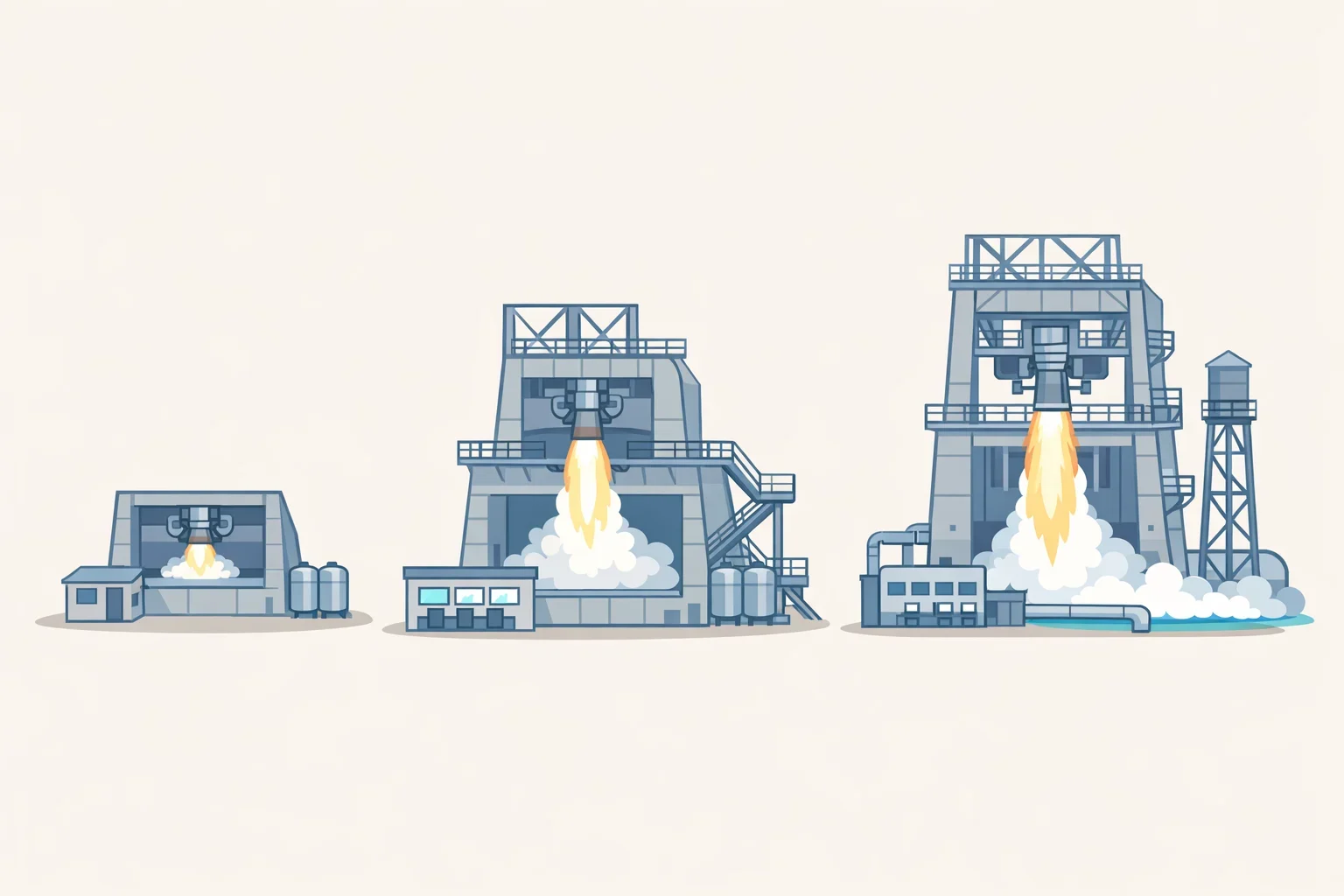
Thirty-two seconds is the best burn Venus has achieved across 600 tests. Customer requirements will likely demand six to fifteen minutes of continuous firing, TechCrunch reported. That gap cannot be closed without purpose-built infrastructure capable of supporting longer runs. This year, Venus received a Texas Space Commission grant to build a larger test stand in Houston, TechCrunch reported. That facility is the first concrete step toward the sustained high-duration testing the company needs.
Duggleby has described the company as the only one "with a flight-proven rotating detonation rocket engine and a clear path to production," per SpaceNews. The flight-proven claim is supported. The production path depends on what comes next.
The Series B is structured around customer-specific vehicle development rather than open-ended research, TechCrunch reported. That framing implies co-development relationships where customers are participants in integration work, not passive buyers waiting on a finished product. It creates accountability that a technology grant does not.
Four things will show whether meaningful progress is happening: burn duration extending well beyond 32 seconds; the Houston test stand coming online and enabling sustained runs; customer-specific vehicle work advancing to hardware milestones; and demand signals converting into signed development agreements. Each is currently unresolved. The Houston facility is the nearest-term marker to watch it is the prerequisite for almost everything else on that list.
