
- Pasqal SPAC Filing: Key Facts Behind the B Nasdaq Listing
- What the Pasqal SPAC filing says about the $500 million headline
- Who has really funded Pasqal, and what they were given in return
- The $2 billion valuation: what the filings support, and what they ask you to assume
- What to watch when the full F-4 is declared effective
- The pre-F-4 verdict
Pasqal SPAC Filing: Key Facts Behind the B Nasdaq Listing
Pasqal's SPAC filing for its planned Nasdaq listing carries a clean headline: a $2 billion valuation, roughly $500 million in expected proceeds, and a French deeptech company ready for global public markets. The reality embedded in those filings is more conditional than the press materials suggest.
The proposed merger with blank-check vehicle Bleichroeder Acquisition Corp. II values Pasqal at $2.0 billion pre-money, with a pro forma market cap of approximately $2.6 billion, and is expected to close in the second half of 2026 pending SEC, Nasdaq, and shareholder approvals (Pasqal press release, March 2026). CEO Wasiq Bokhari told Sifted this week that the move was necessary because the scale of funding Pasqal needs simply does not exist in Europe. A Rule 425 communication filed with the SEC earlier this year described that situation as an "indictment of late-stage private capital in Europe," with one investor arguing that European policymakers are "incapable of funding their own deep tech champions through the finish line" (BBCQ Form 425, April 2026).
The filings point to three things worth examining carefully: conditional proceeds, a roadmap-led valuation, and unresolved governance questions. Understanding each one changes how you read the next.
What the Pasqal SPAC filing says about the $500 million headline
The gross proceeds figure has already shifted once, and the direction is instructive.
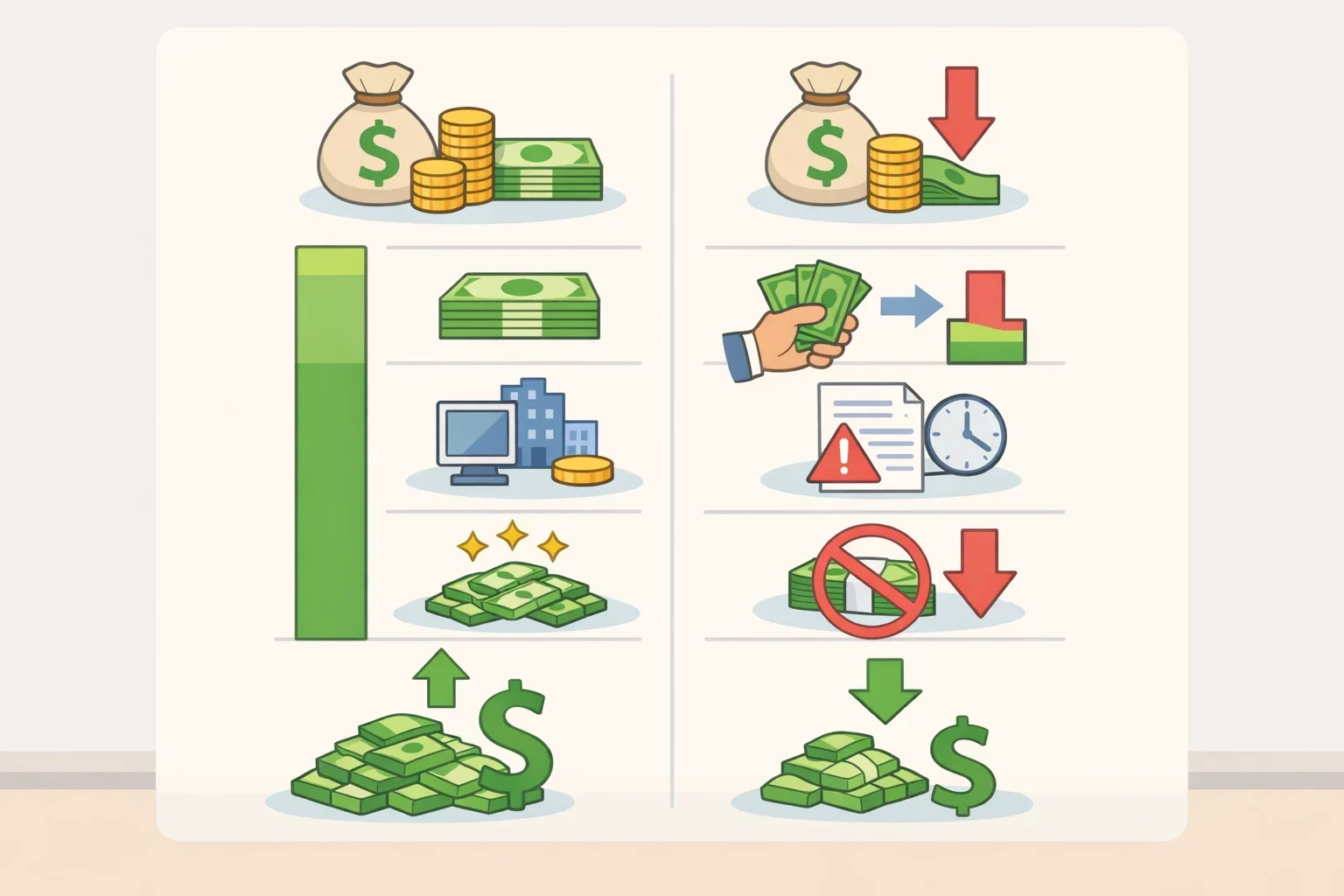
When the deal was announced in March 2026, projected gross proceeds were described as "more than $600 million." By the time Pasqal and Bleichroeder filed their joint Form F-4 registration statement in late May, that figure had been revised to "approximately $500 million" with a critical qualifier: the lower number assumes no Bleichroeder shareholders exercise their right to redeem shares, and that the convertible financing closes as expected (Pasqal press release, May 2026). Both assumptions are material. SPAC redemption rates have frequently run high in recent market cycles, and the convertible tranche, while described as "committed," remains conditional on the deal closing.
Breaking the headline figure into its components:
- ~$158 million cash already on Pasqal's balance sheet as of late February 2026. Not new external capital; existing company money counted toward the total (Pasqal press release, March 2026).
- ~$289 million cash held in Bleichroeder's trust account as of the same date, subject to redemption risk and inclusive of up to $12.25 million in deferred underwriting fees that reduce what Pasqal actually receives (Pasqal press release, March 2026).
- $200 million (~€170 million) committed convertible financing anchored by sponsor-affiliated investor Inflection Point and existing backer Bpifrance Large Venture, plus unnamed institutional investors. Conversion discount, coupon, and investor protections are not disclosed in the press materials (Pasqal press release, March 2026).
- €170 million private round completed as of March 2026, making it the only component of the capital package that is definitively closed and not subject to deal contingencies (Pasqal press release, March 2026).
- Potential PIPE a possible further private placement, size and terms unspecified (Pasqal press release, May 2026).
The aggregate capital being mobilised is genuinely substantial for a European deeptech company at this stage. But the most credible component the completed €170 million private round is not the number appearing in headlines. Under adverse redemption scenarios, the $500 million figure could compress materially. Treat it as an upper-bound estimate, not a floor.
Who has really funded Pasqal, and what they were given in return
The more consequential story beneath the financing mechanics is who actually built Pasqal's capital base before this listing, and on what terms.
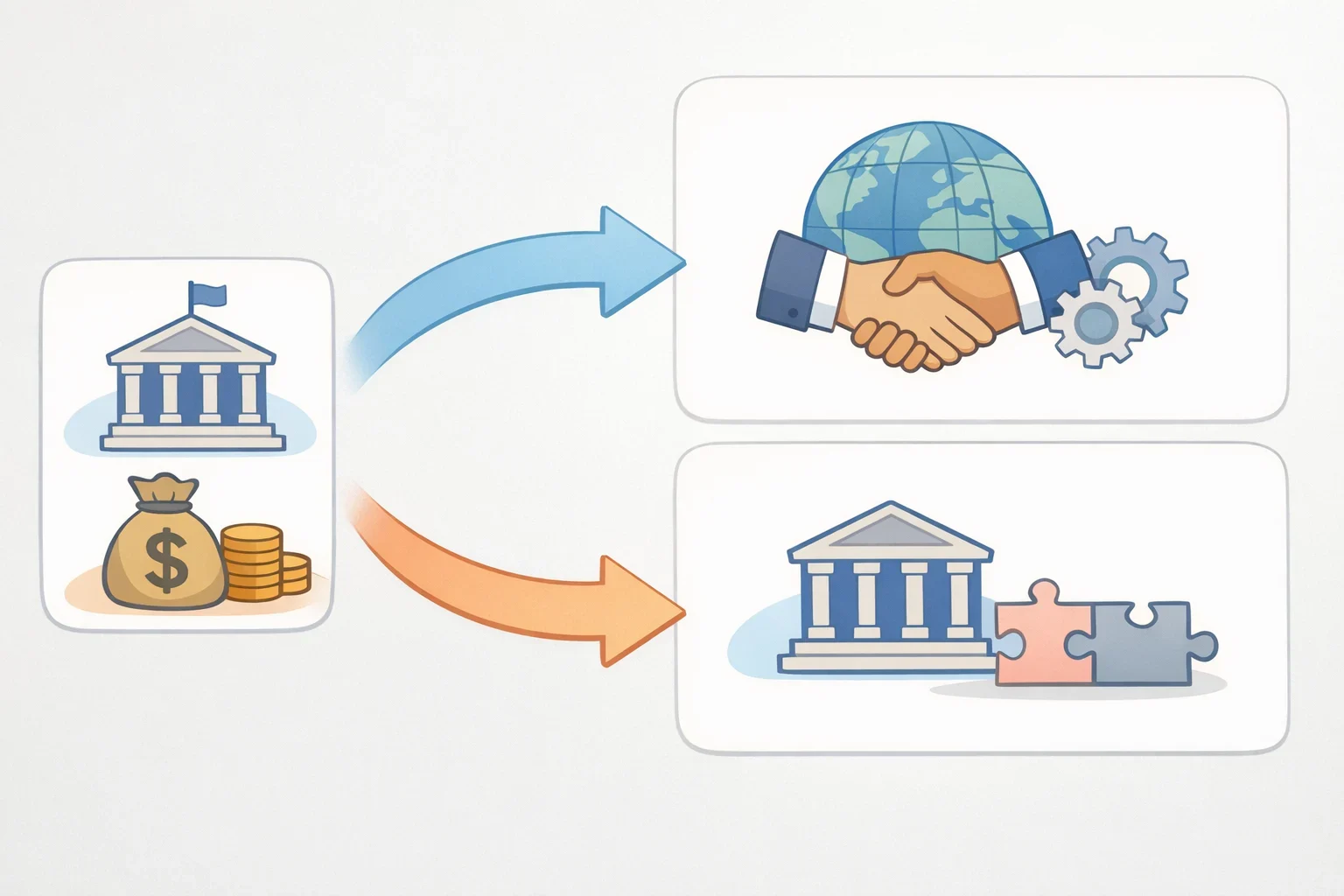
Pasqal's press materials consistently frame this as a company with "solid sovereign support" and a governance structure designed to preserve "French roots." The convertible financing includes Bpifrance Large Venture as an anchor investor, France's state-backed venture arm, and the company is expected to remain a French legal entity headquartered in Palaiseau, with proceeds directed primarily toward French R&D and manufacturing (Pasqal press release, March 2026). The SPAC co-sponsors described Pasqal as "the strength of French scientific excellence translated into commercial leadership" backed by "France's deep national commitment to quantum innovation" (Pasqal press release, March 2026).
A Computer Weekly analysis reproduced in the SEC Rule 425 communication tells a different story. Strip out the early-stage support approximately €3.5 million in EU startup grants and €30 million from Bpifrance and specialist fund Quantonation in 2021 and the approximately €265 million Pasqal raised over the three years to 2026 came primarily from sovereign wealth funds based in Saudi Arabia, Singapore, and South Korea, "on condition that Pasqal shares its technology" (BBCQ Form 425, April 2026). The overwhelming majority of Pasqal's growth capital came not from Europe, and not from private commercial investors, but from foreign state-linked funds with explicit access conditions attached.
What those conditions mean in practice whether they involve IP licensing arrangements, data access, export control implications, national security notifications, or board-level rights is not disclosed in the available filing materials. The press release from March 2026 states only that the governance structure was designed "in close collaboration with the company's shareholders" to consolidate French roots; it does not specify what protections exist, or what rights foreign sovereign investors retain after the listing. That absence is the most significant gap in the current filing package. The company is going public while carrying capital commitments whose strategic terms remain opaque.
The "sovereignty" framing is a positioning choice, not a settled fact. It will come under scrutiny if the full F-4, once declared effective by the SEC, surfaces governance rights or technology-sharing obligations that sit uneasily with the "French champion" identity the deal is being sold on. Investors and policymakers should hold that narrative at arm's length until the full disclosure is available.
The $2 billion valuation: what the filings support, and what they ask you to assume
Pasqal's operating profile, as presented in the filings, is more credible than most quantum hardware companies at this stage. Seven quantum processing units (QPUs) are already deployed in the field, with three more in active production. According to the May filing, every QPU is manufactured at one of Pasqal's two fully operational facilities, giving the company end-to-end control over its hardware supply chain, with capacity to produce up to 13 QPUs annually subject to full staffing and parts availability (Pasqal press release, May 2026). The company serves more than 25 clients and partners including Aramco, Thales, CMA CGM, OVHcloud, IBM, and Sumitomo, and employs over 275 people. Pasqal claims one of the largest deployed quantum hardware footprints among pure-play quantum computing companies globally.
That operational traction establishes that Pasqal is not vaporware. It does not, by itself, justify the price.
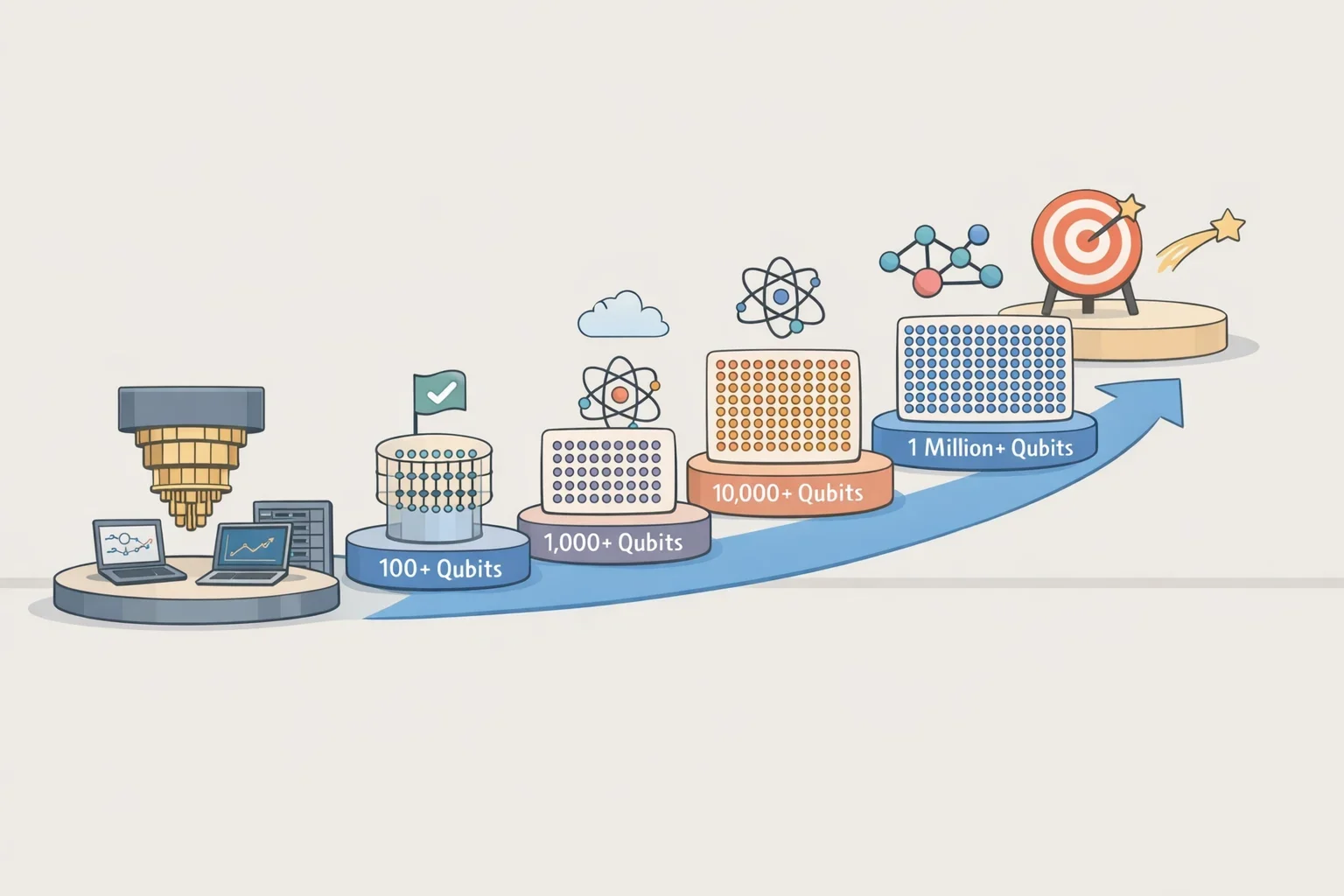
The $2 billion pre-money valuation is not grounded in current revenue. No revenue figures, ARR, order backlog, or gross margin data appear in the press materials reviewed for this piece. The valuation is grounded in a roadmap. Pasqal has demonstrated trapping of more than 1,000 neutral atoms and has published targets of 10,000+ physical qubits per QPU and 200+ logical qubits by end-2029 a substantial jump in scale from current demonstrated capability, and a step into fault-tolerant operation that no quantum company has yet achieved at commercial scale (Pasqal press release, May 2026). The deal itself is explicitly described as designed "to drive commercialization" of Pasqal's current QPU offering language that signals commercial scaling is still ahead of the company, not behind it (Pasqal press release, March 2026).
The $2 billion is a bet: on the roadmap reaching its 2029 targets, on quantum computing becoming commercially significant at scale in the interim, and on Pasqal maintaining technical differentiation in a field where US competitors carry larger balance sheets and more liquid stock. That may be a reasonable bet. But the current filings don't answer the two questions that matter most for evaluating it: how much revenue do the seven deployed QPUs generate today, and what happens to the valuation thesis if the 2029 qubit targets slip by two or three years?
What to watch when the full F-4 is declared effective
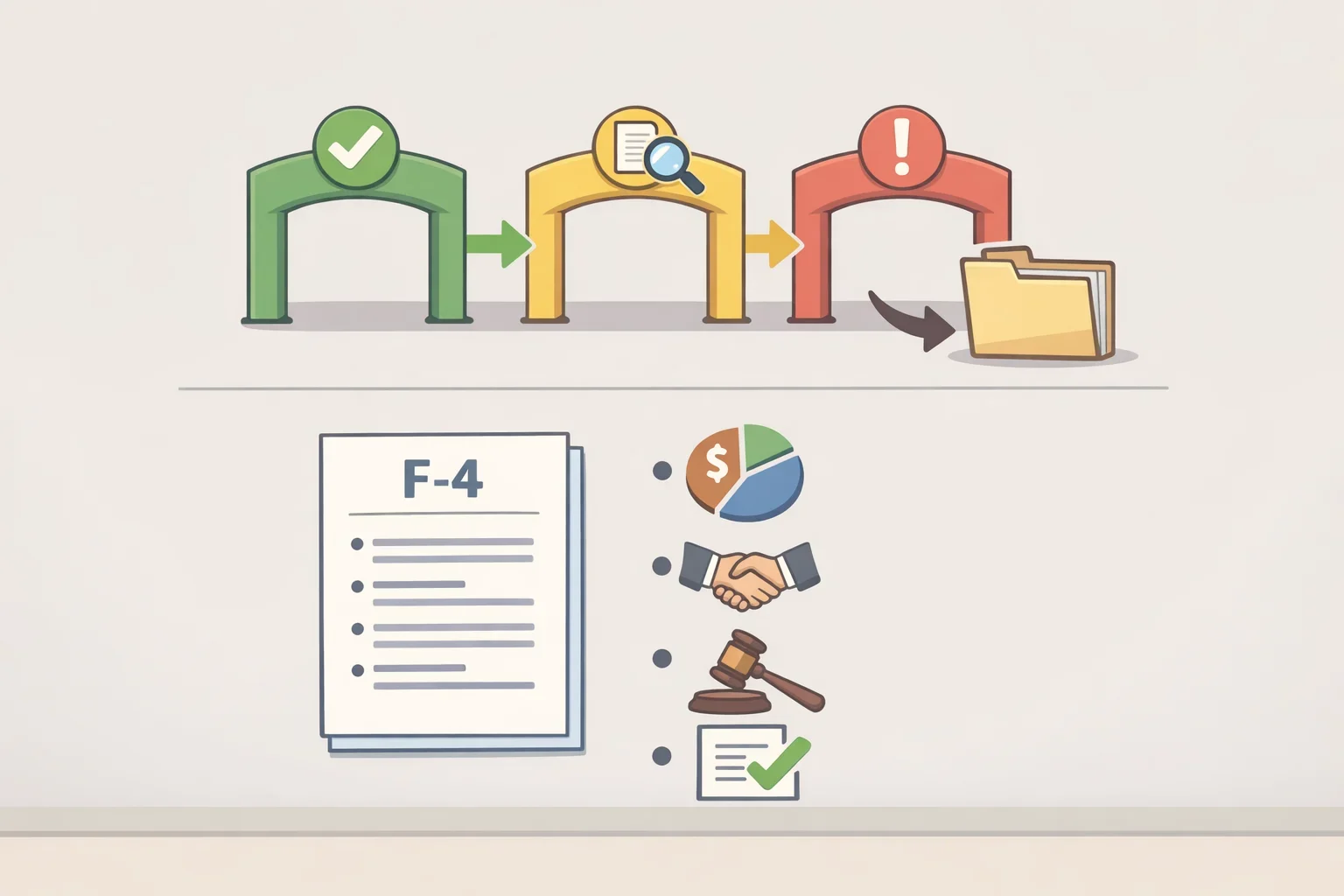
Closing the deal in the second half of 2026 requires several distinct approvals to land in sequence: the SEC declaring the F-4 effective, Bleichroeder shareholders approving the combination, the convertible financing closing, and Nasdaq granting listing approval (Pasqal press release, May 2026). Each gate is an opportunity for material new information to surface and for the deal economics to shift.
Three disclosures in the effective F-4 would materially change the story. First, the governance rights of foreign sovereign investors post-merger: if the full registration statement reveals board seats, veto rights, or IP access arrangements held by Saudi, Singaporean, or South Korean state-linked funds, the "sovereign French company" framing becomes significantly harder to sustain. Second, the precise redemption mechanics and any floor arrangements: investors should look for minimum proceeds guarantees or backstop commitments that would prevent the trust cash from eroding. Third, commercial revenue disclosure: even directional figures or contract backlog data would allow independent triangulation of the $2 billion pre-money number and shift the conversation away from a purely roadmap-led valuation.
Pasqal also intends a secondary Paris listing on Euronext, targeted for 2026 or 2027, which will require additional disclosure under European prospectus rules (Pasqal press release, March 2026). The two regulatory regimes ask different questions, and the answers to the European ones may be more revealing on sovereignty and control. The Euronext prospectus, when filed, is worth reading alongside the F-4.
The pre-F-4 verdict
Before the registration statement is declared effective, the picture looks like this: Pasqal is a genuine operating company with deployed hardware, a real customer base, and a technically credible roadmap. Those are not small things in a sector crowded with promises and thin on deployments.
What the current disclosure does not yet support is taking the headline proceeds, the sovereignty framing, or the $2 billion valuation at face value. The $500 million figure is best-case and structurally conditional. The "French champion" identity rests on a governance structure whose terms with foreign sovereign investors remain undisclosed. The valuation is a forward bet with no revenue anchor in the public materials. None of that makes the deal uninvestable but it does mean that the information needed to evaluate it properly is still sitting inside a registration statement the SEC has not yet cleared. The effective F-4 is the document that matters. Everything before it is a press release.
