

- Tech Worker Quits Job to Start BBQ Restaurant: What the Real Numbers Show
- What a former tech worker starting a BBQ restaurant really looks like in year one
- Tech executive turned restaurateur: the cases where the numbers are documented
- The gap between a strong revenue month and a viable business
- What remains unverified and how to read any story like this one
Tech Worker Quits Job to Start BBQ Restaurant: What the Real Numbers Show
Eric Nathal was a VP of business development when he decided to quit. Two months earlier, he'd had the idea. Then he found a commercial rotisserie on Craigslist, drove three hours with his brother to pick it up, moved to Austin, and opened Austin Rotisserie. He was 40, newly married, new to the city. "It was a huge risk," he told Oysterlink earlier this year. Eight years later, the restaurant is still open.
No verified revenue figure for Austin Rotisserie appears in the reporting available here. A $2.3 million figure that surfaces in some founder-restaurant coverage belongs to a separate story entirely: a burrito stand that started in a Home Depot parking lot, documented in a CNBC segment from three years ago. It has nothing to do with Nathal. What the Oysterlink interview does document about his actual experience is considerably more useful than a borrowed revenue number.
What a former tech worker starting a BBQ restaurant really looks like in year one

The opening weeks at Austin Rotisserie were rough by any measure. Setup took an hour and a half each day before a single customer walked in. Some days revenue came in at $80. Crossing $300 in a single day was worth remarking on; hitting $400 felt like a record, per the Oysterlink interview. These aren't embarrassing footnotes to an otherwise clean success story. They're the baseline reality for any new food concept with no established customer base and a founder learning the operation in real time.
That grounding matters because it's the part of founder-pivot stories that gets cut when a headline number is available. Fixed costs don't wait for the customer base to materialize. Rent, equipment debt, food waste, labor those run whether the restaurant is full or mostly empty. The founders who get through the early period are, almost without exception, the ones who kept their fixed structure small enough that slow weeks didn't end the business before it found its footing.
Nathal's Craigslist rotisserie was exactly that kind of decision. He didn't lease a new commercial unit or finance premium equipment. He found a used machine, drove three hours to retrieve it, and built the restaurant's core capacity for a fraction of what a new-equipment purchase would have cost. That kept early overhead low enough to survive $80 days. It's not a charming backstory detail. It's the financial logic that made the rest of the story possible.
Eight years of continued operation in Austin's competitive restaurant market is the actual data point his story produces. That's not a small thing. Most independent restaurants don't last five years.
Tech executive turned restaurateur: the cases where the numbers are documented
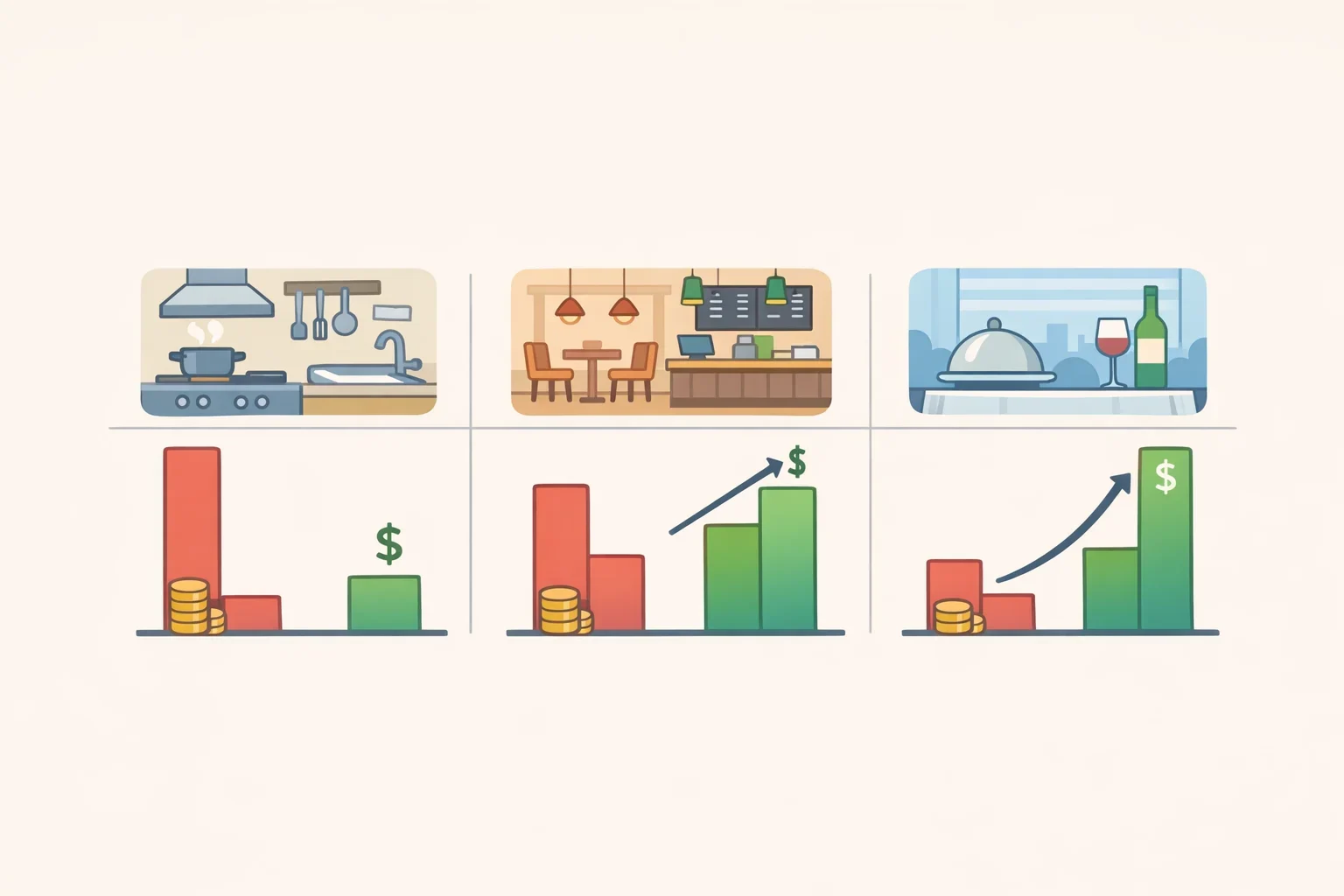
Two cases from earlier this year, both documented by CNBC, show variations on the same operating discipline playing out at different stages.
The founder of Cousin's Burger spent 24 years in IT before launching his halal smashburger concept in 2024. His approach to entry was methodical. Before signing a single lease, he tested demand at food festivals, bought enough meat to feed 500 customers expecting leftovers, and sold out by 6 p.m. Per CNBC's report earlier this year, his first permanent location came through a partnership with a restaurant owner he met at the halal festival, who converted one of his existing sites into the first Cousin's Burger. No fresh buildout, no new lease negotiated from scratch. Eight locations across Pennsylvania, New Jersey, and Delaware followed, with combined 2025 revenue exceeding $4 million, based on documents reviewed by CNBC.
The Nishaan story is more compressed. A 34-year-old product manager who spent nearly a decade in tech opened the Pakistani-American street food restaurant in New York City's East Village after his second layoff. He put $70,000 in savings toward a deposit, electrical work, appliances, and remodeling, and currently pays $6,150 a month in rent, per CNBC's coverage earlier this year. Nishaan's best month generated roughly $140,000 in gross revenue, based on documents reviewed by CNBC.
Neither figure translates directly to Austin Rotisserie. But they establish that the pattern Nathal's story represents is real and documented elsewhere and that the discipline behind it shows up consistently, whether the concept is rotisserie chicken in Austin, smashburgers in New Jersey, or Pakistani chopped cheese in the East Village.
The gap between a strong revenue month and a viable business

Revenue figures in founder profiles almost never travel with the context that would make them mean something. Nishaan's $140,000 peak month is gross revenue, not profit, reached after months of building against $6,150 in fixed monthly rent and a $70,000 startup investment already spent. Cousin's Burger's $4 million covers eight locations in their second year of operation not what a single unit produced. Dan Defossey's barbecue restaurant group brought in over $9 million in 2022, as CNBC reported in July 2023, but Defossey is a mature multi-location operator who left Apple years before those numbers materialized.
Collapsing any of those into "a tech worker opened a restaurant and made X" is accurate the same way a weather report is accurate: technically correct, stripped of everything that determines whether the information is useful.
The $80 days at Austin Rotisserie are more informative than any of those figures for someone considering a similar move. They describe the actual starting position: no revenue base, high time cost, low but real fixed costs, and a founder absorbing all of it while figuring out the operation. The Craigslist rotisserie kept that cost structure survivable. A financed equipment purchase or a premium lease signed on optimism would have made the same $80 days unrecoverable.
What remains unverified and how to read any story like this one
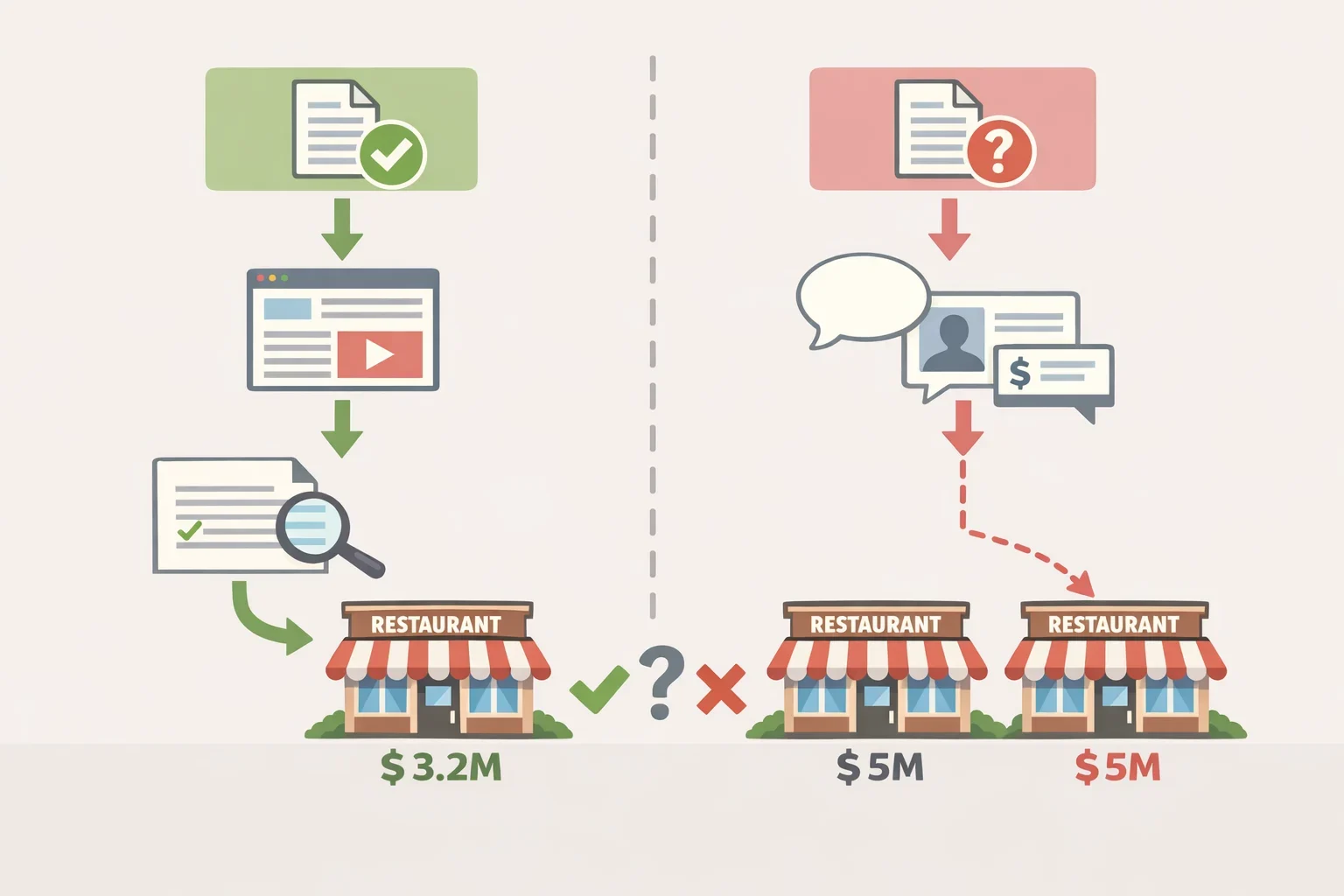
The $2.3 million figure that circulates in some corners of tech-worker-turned-restaurateur coverage comes from a burrito stand that started in a Home Depot parking lot, documented alongside Defossey's barbecue story in that same CNBC segment from three years ago. The number migrated to Nathal's story because the narrative arc is similar enough to make it feel plausible. A tech executive opens a food business; a revenue figure exists somewhere in the same media ecosystem; the two get attached without fabrication, just the ordinary entropy of aggregation.
The sourced record of Nathal's story, based on the reporting available here, contains his role, his age when he quit, the Craigslist rotisserie purchase, his early daily sales figures, and eight years of reflection. No annual revenue figure for Austin Rotisserie appears anywhere in it. The "14-year career" framing that appears in some versions of his story likewise has no sourced basis in the available reporting; what's confirmed is that he held a VP-level position and was 40 when he made the leap.
For any story in this category, a few questions do most of the work. Is the revenue figure for one location or several? Does it represent gross sales or something after costs? What fixed expenses ran against it each month? How long did it take to reach from a standing start? Applied to the cases documented here: Nishaan's $140,000 is single-location gross revenue, in its best month. Cousin's Burger's $4 million is an eight-location chain in year two. Defossey's $9 million is a mature group, years post-launch.
The confirmed fact about Nathal is that he says it's been eight years. That's what the sourcing supports. A VP-level tech executive found a used rotisserie on Craigslist, drove three hours to get it, opened a barbecue restaurant in Austin at 40, and eight years later is still cooking. Whether Austin Rotisserie's revenue ever matched the figures attached to his name in republished coverage remains undocumented.
The story doesn't need a borrowed number to be worth reading. It's a better story without one.
