


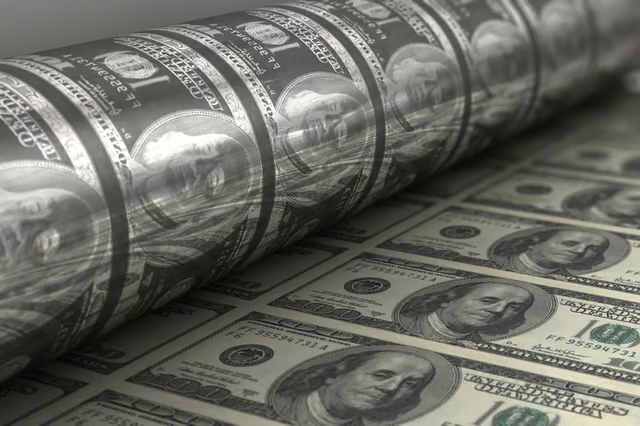
The term “seigniorage” refers to the revenue a government generates by printing money. Seigniorage may serve as a means of paying part of a government’s expenses because the new currency can be used to purchase goods and services. Seigniorage adds to the money supply and can cause inflation, so it is sometimes calculated as “inflation tax.”
The seigniorage of new money is equal to the value of the money minus the cost required to produce it. The cost is usually low. For example, the Federal Reserve Bank of Dallas says it costs only pennies to print a $100 bill. If it costs 5 cents, the seigniorage equals $99.95. However, seigniorage can be negative if it costs more to create new money than the value of the goods it will buy. This has sometimes happened with pennies, which may cost more to mint than they are worth as coins.
When a government prints new money, it adds nothing to the output of goods and services. Only the supply of money increases. Suppose the government prints enough money to increase the money supply by 5 percent, so there is $105 for every $100 of goods and services. Over time, prices rise and the value of money goes down by 5 percent. Essentially, the 5 percent seigniorage finances the government by reducing the value of everyone’s money by 5 percent. For this reason, seigniorage is often referred to as an inflation tax.
